

Home / Field Notes — Land Clearing Knowledge Base / Clearing Land for a Septic System in New Jersey
Clearing Land for a Septic System in New Jersey
Published April 7, 2026 by Brush Busters • Last reviewed April 7, 2026
If you’re building on a property without public sewer in Hunterdon, Warren, Somerset, or Morris County, you’re installing a septic system — and that system needs cleared ground before anyone can test the soil, design the layout, or dig the tank. The septic field area is often the largest single cleared zone on a rural lot, sometimes bigger than the house footprint itself. How you clear it matters because the soil profile is everything. Strip it with a bulldozer and you’ve compacted the very soil layer the drain field depends on for percolation. Clear it with forestry mulching and the soil structure stays intact.
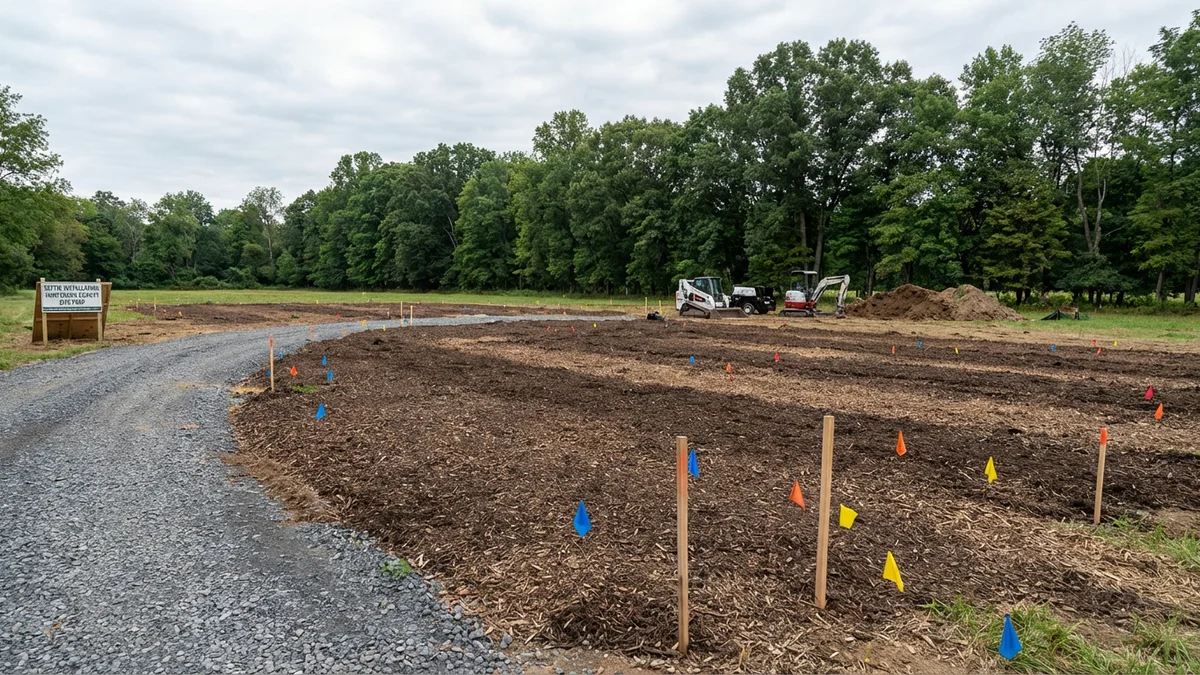
What needs to be cleared for a septic system
A standard septic system in New Jersey has three components that need cleared ground: the tank location, the drain field (also called the leach field or disposal field), and the connection corridor between the house and the tank.
The drain field is the big one. NJ regulations require specific setback distances from wells, property lines, buildings, waterways, and slopes. A conventional drain field for a three-bedroom house can span 1,500 to 3,000 square feet. Alternative systems (mound systems, drip dispersal) may need even more area. The New Jersey Department of Environmental Protection (NJ DEP) regulates septic systems under N.J.A.C. 7:9A — Standards for Individual Subsurface Sewage Disposal Systems.
Beyond the active components, you need cleared access for the excavator and material delivery — a path at least 12 feet wide from the road to the work area. And most importantly, you need cleared ground for the perc test (percolation test) BEFORE the system is designed. The perc test determines whether the soil drains fast enough for a conventional system or whether you need an alternative design.
On properties in Lebanon Township, Alexandria, Delaware Township, and the rural parts of Warren County, septic systems are standard on nearly every new build. The terrain varies from deep valley-floor soils that perc easily to thin ridgetop soils over fractured rock that create design challenges.
Why soil preservation matters for septic
This is the single most important reason to use forestry mulching instead of bulldozing for septic site prep.
A septic drain field works by dispersing wastewater into the soil, where bacteria break down the waste as it percolates through the soil profile. The speed and effectiveness of this process depends entirely on the soil structure — the pore spaces, the layering, the organic content. Compacted soil doesn’t percolate. Stripped soil doesn’t have the biological layer that breaks down waste.
A bulldozer blade compresses and displaces the top 6 to 12 inches of soil — the most biologically active layer, and often the layer with the best percolation characteristics. This can literally change the perc test results and push the design from a conventional system (cheaper) to an alternative system (significantly more expensive).
Forestry mulching processes vegetation at the surface without compressing the soil underneath. The tracked machine distributes its weight across a wide footprint, and the mulch layer protects the soil from rain compaction after clearing. When the perc test is conducted on mulched ground, the soil profile is in its natural, undisturbed state — which gives the most accurate test results and the best chance of qualifying for a conventional system.
The correct clearing sequence for septic
1. Survey and stake. The surveyor marks property boundaries and the soil scientist or engineer identifies the potential drain field locations based on slope, setbacks, and preliminary soil assessment.
2. Call 811. Mark all underground utilities before any equipment enters the property.
3. Clear the test area. The soil scientist needs clear ground to conduct the perc test and soil profile evaluation. Clear the proposed drain field area plus a buffer (the soil scientist may want to test multiple locations). Also clear access for the backhoe that digs the test pits.
4. Perc test and soil evaluation. The licensed evaluator conducts percolation tests and examines the soil profile in test pits. This determines the system type, size, and layout.
5. System design. A licensed NJ septic designer uses the test results to create the system plan and submit it to the local health department for permit approval.
6. Clear the full construction zone. Once the design is approved and the permit is issued, clear any additional area needed for the tank, distribution system, access for the installation excavator, and material staging.
7. Installation. The septic contractor installs the system on the cleared, undisturbed soil.
The key: clear the test area EARLY so the perc test doesn’t become a bottleneck in the construction timeline. In our experience, the most common scheduling mistake on rural NJ builds is treating septic clearing as an afterthought — then waiting weeks for a soil evaluator while the entire project sits idle.
Costs for septic site clearing
The clearing portion of a septic installation is a relatively small cost within the overall system budget:
Clearing the drain field area (1,500–3,000 sq ft) plus tank location plus access corridor typically runs $1,500 to $3,500 with forestry mulching. On properties where the septic area is part of a larger building lot clearing, the septic portion adds incremental cost rather than a separate mobilization.
Compare this to the septic system itself, which runs $15,000 to $40,000+ for installation in New Jersey depending on system type. The clearing cost is 5–10% of the overall septic budget — and getting it right (preserving soil structure, not compacting the drain field area) can mean the difference between qualifying for a conventional system (~$15,000–$25,000) and needing a mound or alternative system (~$25,000–$40,000+).
NJ septic regulations that affect clearing
Setback distances. NJ DEP requires minimum separation distances between the septic system and other features: 50 feet from a well, 10 feet from property lines, 10 feet from buildings, 50 feet from surface water, and additional distances from slopes. These setbacks define where the drain field CAN go — and therefore where you need to clear.
Highlands considerations. On lots in the Highlands Preservation Area, the septic system is part of the broader development review. The clearing for the septic system is typically included in the Highlands Applicability Determination for the overall construction project.
Replacement area. NJ regulations typically require a designated replacement drain field area — a second location that can be used if the primary field ever fails. This area should also be kept clear of deep-rooted trees and structures, though it doesn’t need to be cleared to bare ground.
Tree root setbacks. The drain field should be kept away from large trees because root intrusion damages the distribution pipes and the infiltrative surface. As a general practice, keep the drain field at least 20 feet from large trees. Forestry mulching around (but not over) the drain field area removes brush and saplings while leaving the larger trees that are outside the setback zone.
Common Questions
How much does it cost to clear land for a septic system in NJ?
Septic site clearing runs $1,500–$3,500 with forestry mulching. On larger lot clearing projects, it’s included in the overall price. Get a free estimate.
Should I clear before or after the perc test?
Clear BEFORE the perc test. The soil scientist needs accessible ground for test pits. Clearing early prevents the perc test from holding up the project.
Can bulldozing affect perc test results?
Yes — bulldozing compacts the soil layers that the drain field depends on. This can downgrade your perc results and force a more expensive system. Forestry mulching preserves soil structure.
How close to the septic system can trees be?
Keep large trees at least 20 feet from the drain field. Clear all brush and small trees from the drain field area and its immediate perimeter.
Does the Highlands Act affect septic installation?
In the Highlands Preservation Area, septic is reviewed as part of the development application. Read our Highlands Act guide.
What's the replacement drain field area?
It’s a designated backup location required by NJ regulations. Keep it free of deep-rooted trees and structures. It doesn’t need bare-ground clearing but should be managed.
Can I install a septic system on a steep lot?
Yes, but slope affects system design. Slopes over 25% typically need alternative systems. Forestry mulching stabilizes steep terrain during and after clearing.
How long does septic site clearing take?
Usually half a day to one full day. If it’s part of a larger lot clearing, it’s included in the overall project timeline.
Related Services
Land Clearing / Lot Prep
Residential and small commercial lots cleared and prepped for building, grading, or landscaping.
Relevant City Pages
These city pages are a good fit if you want to compare the article advice with the kind of properties we see on the ground.
Related Articles
Clearing Land for Home Building in New Jersey
Complete guide to clearing a residential lot for new construction in New Jersey. Site prep costs, permits, Highlands Act, 811, and what to do before the builder shows up.
Do You Need Permits for Land Clearing in New Jersey?
Do you need a permit to clear land in New Jersey? Learn when tree ordinances, wetlands, and the Highlands Act can affect your project.
Want the full New Jersey land clearing playbook?
This article covers one piece of the puzzle. The complete guide ties together methods, costs, permits, terrain, and contractor selection in one place.
Need the drain field area cleared before the perc test?
We clear for septic without compacting the soil your system depends on. Free estimates.
Or call (908) 774-9235.