
Home / Services / Forestry Mulching
Forestry Mulching in New Jersey
Forestry mulching is one of the fastest ways to reclaim overgrown land in New Jersey without turning the property into a mud job. Instead of pushing everything into piles, hauling debris away, or lighting burn piles, a forestry mulcher grinds brush, saplings, vines, and small trees directly at ground level. The material stays on the site as a layer of mulch, which means the job moves faster and the property looks cleaner when we leave.
That matters in New Jersey, where a lot of properties are rocky, sloped, wooded, or tight to wetlands, stream buffers, and existing tree lines. Brush Busters uses commercial mulching equipment that can work through thick growth while keeping disturbance controlled and selective. If you need a residential lot opened up, a field edge cleaned back, or a larger parcel brought under control, forestry mulching usually gives you the cleanest path from overgrown to usable. When you are ready to talk scope, you can get a free quote.
How Forestry Mulching Works
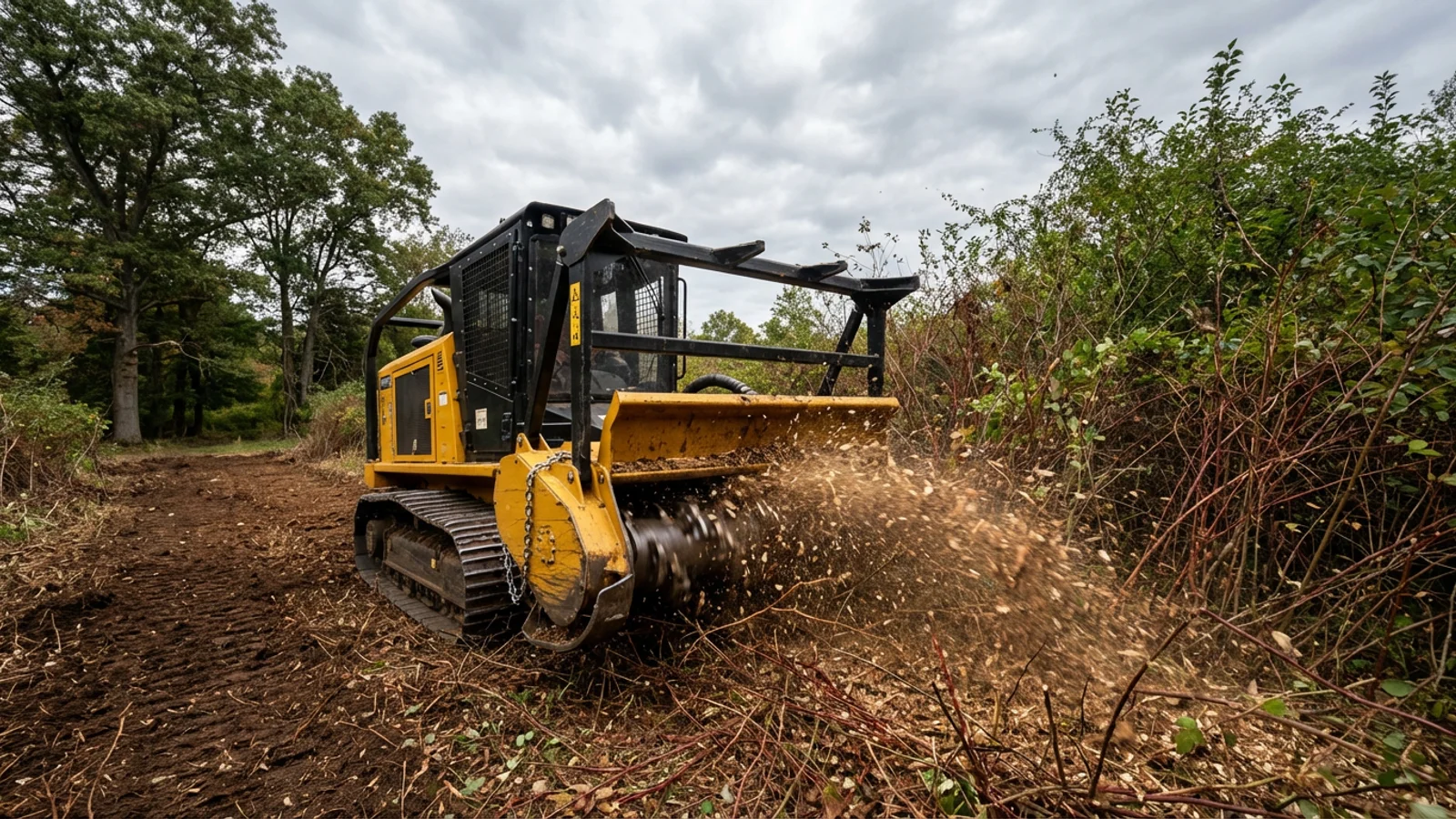
A forestry mulcher uses a spinning drum or cutting head to process standing vegetation into small mulch chips in one pass. We work from the outside in, establish safe access, and then grind material down at the pace the site allows. Dense thickets of saplings, multiflora rose, bittersweet, and brush get reduced right where they stand instead of being piled, dragged, and handled twice.
On most New Jersey properties, the mechanical advantage is simple: the machine clears and finishes at the same time. As the head mulches the vegetation, the material gets spread over the soil surface as a protective layer. That mulch helps reduce exposed dirt, cuts down on erosion control problems, and keeps you from ending up with rows of debris waiting for a second contractor. If you want the real site timeline, our guide on what happens after mulching covers the next phase clearly.
We also use the machine selectively. If there are trees, stone walls, drainage features, fence lines, or edges you want preserved, we can work around them. On rocky sites in Morris, Sussex, and Warren counties, that control matters. The goal is not just knocking everything down. The goal is leaving the land cleaner, more open, and easier to manage without unnecessary damage to the parts of the property you actually want to keep.
What's Included
- On-site mulching of brush, vines, saplings, and small trees up to roughly 6-8 inches, depending on species, density, and ground conditions.
- Selective clearing around tree lines, trails, structures, fences, drainage swales, and landscape features you want left intact.
- One-pass reduction of debris so you are not left with burn piles, stacked brush, or a second cleanup phase.
- Tracked equipment suited for steep sections, rocky ground, and uneven access common across New Jersey.
- A finished mulch layer that helps stabilize exposed ground and makes the cleared area easier to walk and maintain.
- A written scope and fixed quote after the site visit, plus a straightforward conversation about what the finished job will look like.
Best For
- Overgrown residential lots where mowing is no longer realistic and the property needs to be opened back up quickly.
- Field edges, wood lines, and unused acreage where saplings and invasive brush are starting to take over.
- Steep or uneven sites where conventional equipment struggles and you want less soil disturbance than a dozer usually leaves behind.
- Wetland-adjacent properties where you need controlled, selective clearing without hauling piles back and forth across the site.
- Landowners who want a finished-looking result in one mobilization instead of paying separately for clearing, piling, and debris disposal.
Pricing Factors for Forestry Mulching
Forestry mulching prices in New Jersey usually come down to acreage, brush density, stem size, slope, and access. A lightly overgrown field edge moves very differently than a parcel packed with thorny brush, knotweed, and six-inch saplings. The heavier the material and the tighter the access, the more machine time the job takes. That is why we quote each site based on what is actually there instead of forcing every property into a flat formula.
Terrain matters too. Steep ground in the Highlands region, rocky sections in Sussex or Warren County, and soft spots near wet areas all affect production pace. Selective work also changes the number. If you want us to leave certain trees, work carefully around boundaries, or maintain access while the job is happening, that calls for a more deliberate approach. The right way to price forestry mulching is to look at the land, talk through the goal, and then give you a clear project number that matches the real conditions. Our breakdown of how we price forestry mulching explains why hourly guessing is the wrong way to quote this work.
Why Brush Busters for Forestry Mulching
Brush Busters is owner-operated, which makes a real difference on forestry mulching work. The person walking the site, discussing what stays and what goes, and explaining the final result is the same person responsible for the machine work. If you want to see the kind of machine details that actually matter, start with our equipment article. That keeps communication tight, especially on selective clearing jobs where details matter. You are not handing your plan from an estimator to a different crew and hoping it gets interpreted the same way.
We also understand the types of properties common across New Jersey. Some sites need room opened up around a future homesite. Some need safe access down a slope. Some need invasive pressure knocked back without tearing up the soil or stripping the property bare. If you are sorting out where mulching fits, our comparisons on tree removal vs. mulching and brush hogging vs. mulching help clarify the line. Forestry mulching only works well when the operator reads the land correctly. That is the difference between a job that looks controlled and finished and one that just looks aggressively cut up.
Where We Offer Forestry Mulching
We work across Hunterdon, Somerset, Warren, and Morris counties, with strong demand in Forestry Mulching in Clinton, NJ, Forestry Mulching in Bedminster, NJ, Forestry Mulching in Tewksbury, NJ, Forestry Mulching in Chester, NJ, Forestry Mulching in Hillsborough, NJ. Forestry Mulching is a good fit for everything from tight residential lots to rough back acreage, depending on the scope and the access.
Cities We Serve
These city pages break out how the work changes from county to county, including terrain, access, property type, and the overgrowth we see most often on the ground.
Hunterdon County
Somerset County
Warren County
Morris County
Before and After
Before
After
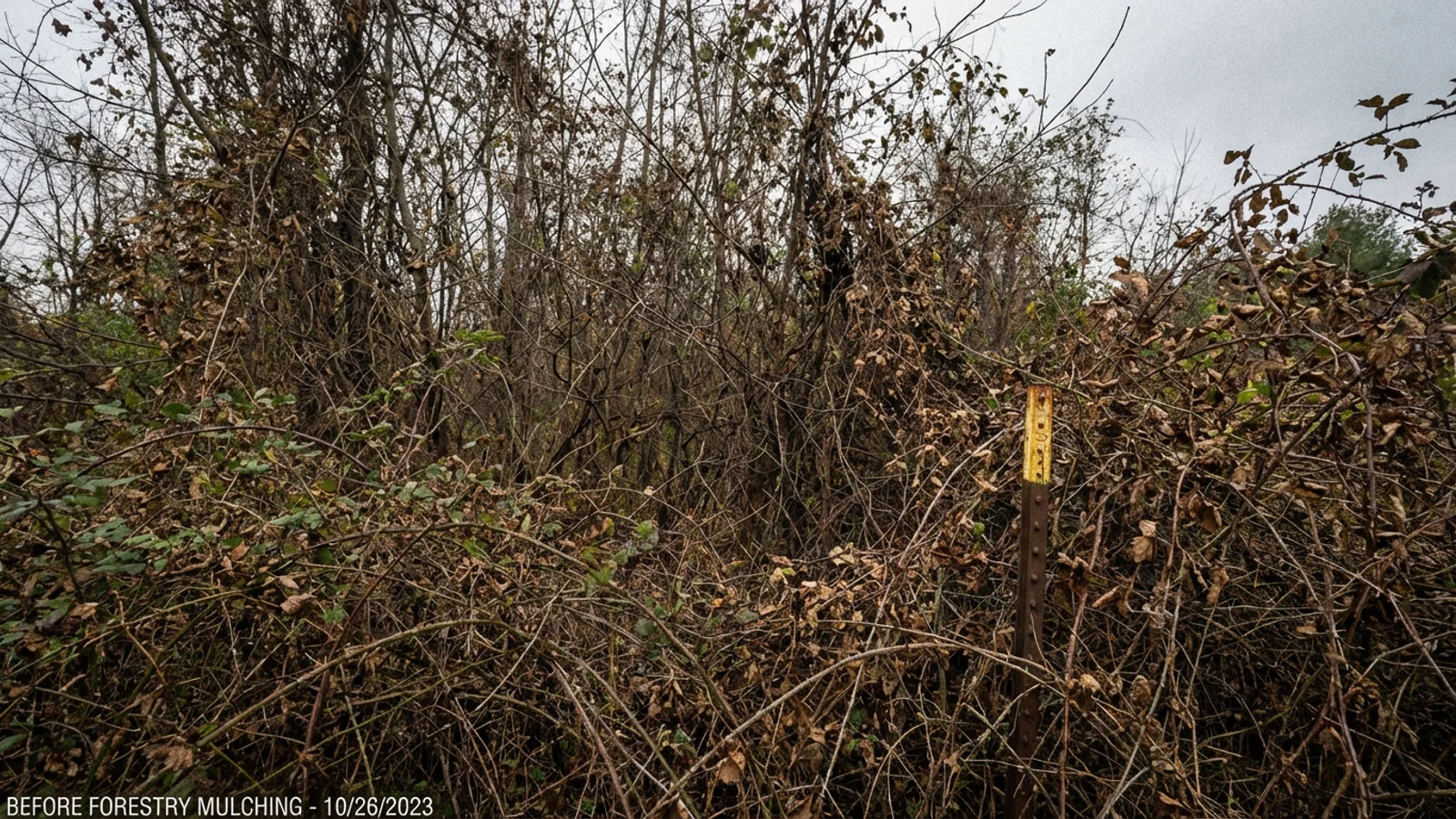
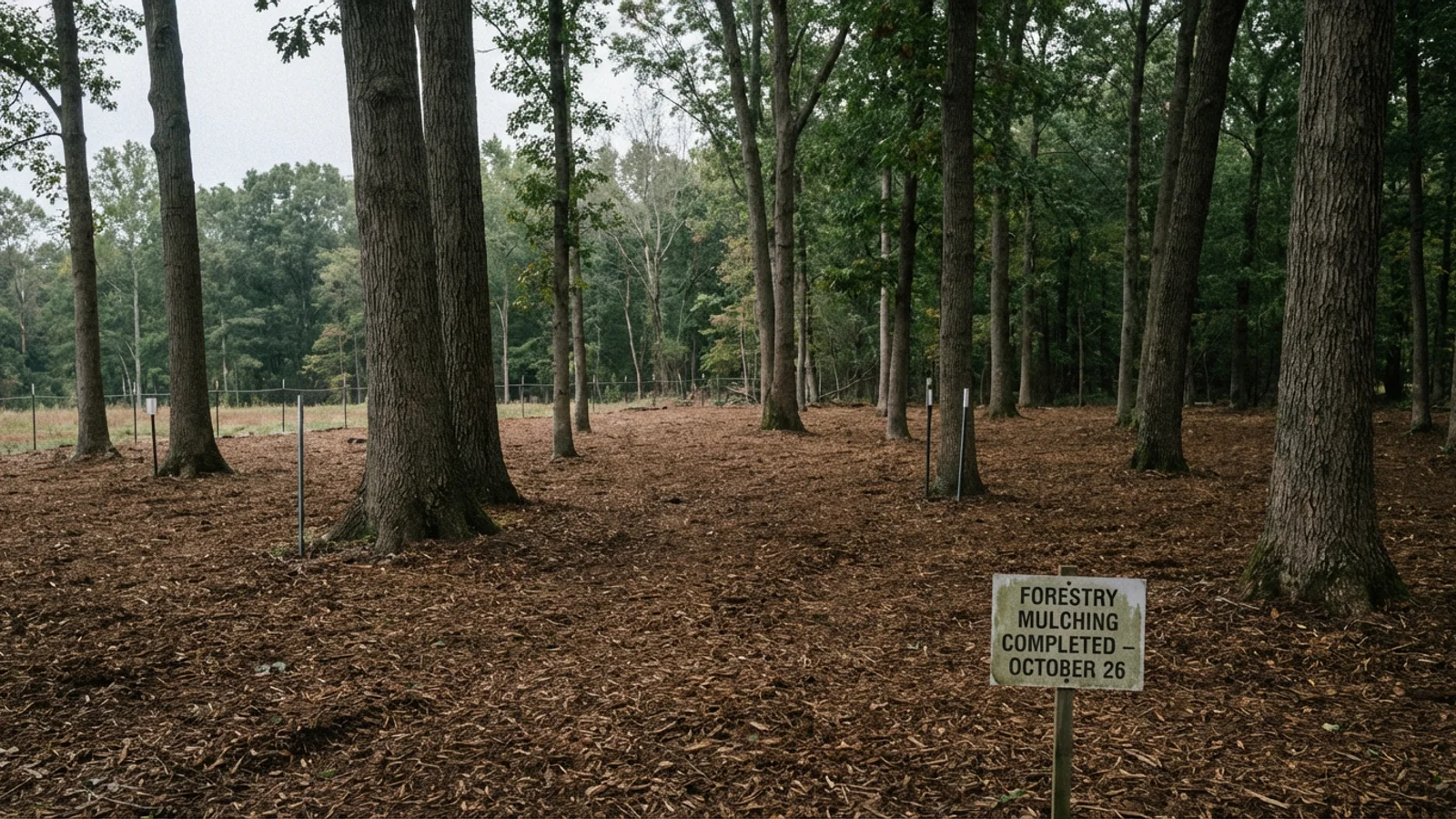
Typical forestry mulching transformation from overgrown ground to usable space
Common Questions
What is forestry mulching?
Forestry mulching is a land clearing method that uses a specialized machine to grind brush, vines, saplings, and small trees into mulch right on the property. Instead of piling and hauling debris away, the vegetation is processed in place and left as a protective ground cover.
How much does forestry mulching cost in NJ?
Forestry mulching cost in New Jersey depends on acreage, brush density, tree size, slope, access, and how selective the clearing needs to be. A lightly overgrown lot will price differently than a steep parcel packed with saplings and invasive growth. We price most jobs as a fixed project after a site visit, so you know the scope before work starts. The fastest next step is to get a free quote.
How long does forestry mulching take?
Many residential forestry mulching jobs take one to two days once we are on-site. Larger parcels, heavier stems, wet ground, or steep terrain can extend the timeline. We include an expected production window with the quote.
Will forestry mulching damage my soil?
Forestry mulching is designed to minimize soil disturbance compared with pushing, piling, or stripping. The machine works at ground level and leaves a mulch layer behind, which helps protect the surface from erosion and weather. Any site with wet pockets or unstable ground still needs to be evaluated carefully.
Can forestry mulching handle steep hills?
Yes, forestry mulching can work on steep hills when the machine and operator are matched to the terrain. New Jersey has a lot of slope, ledge, and uneven ground, so hillside work gets planned differently than flat-field work. We review grade, access, footing, and runoff before committing to the job.
What size trees can a forestry mulcher handle?
On most local jobs, a forestry mulcher can handle brush, saplings, and trees up to about 6 to 8 inches in diameter. Species, lean, density, and site conditions matter, so bigger material may need a different plan or supporting equipment.
Is forestry mulching better than bulldozing?
For many New Jersey properties, yes. Forestry mulching usually creates less ground disturbance, leaves useful mulch behind, and avoids piles that still need to be dealt with later. Bulldozing still has a place on some projects, but it is not automatically the best answer for every clearing job.
Does the mulch attract termites?
The mulch itself does not suddenly create a termite problem on a property. We are not piling fresh wood chips against your foundation. On normal clearing work, the mulch is spread across the site as a thin ground layer. As with any organic material, it should not be intentionally banked against a house or wood-framed structure.
Can you mulch around trees I want to keep?
Yes. Selective work is one of the biggest advantages of forestry mulching. We can clear heavy understory around desirable trees, open sightlines, and leave specific natural features intact as long as the site conditions allow controlled access.
Do I need a permit for forestry mulching in New Jersey?
Some forestry mulching jobs do not require a permit, but it depends on the town, the scale of the work, and the property conditions. Municipal tree ordinances, wetland buffers, Highlands restrictions, and NJ DEP oversight can all matter. We can flag the common issues during the estimate, and you can review New Jersey land clearing permits guide before the job moves forward.
Related Services
Brush Clearing
Thick undergrowth, vines, and overgrown fence lines cleared down to clean, walkable ground.
Land Clearing / Lot Prep
Residential and small commercial lots cleared and prepped for building, grading, or landscaping.
Hillside Clearing
Steep terrain and rocky slopes cleared safely with tracked, low-ground-pressure equipment.
Invasive Species Removal
Japanese knotweed, multiflora rose, mile-a-minute vine, and other NJ invasives eliminated at ground level.
Need the full New Jersey clearing picture?
Our complete guide walks through methods, costs, permits, regulations, invasive species, and how to choose the right approach before you commit to a job.
Need a Straight Answer on the Scope?
Tell us where the property is, what needs to go, and what you want to keep. We will walk the site and give you a clear next step.
Or call (908) 774-9235.