
Home / Services / Hillside Clearing
Hillside & Steep Terrain Clearing in New Jersey
New Jersey has a lot of terrain that looks manageable from the driveway and completely different once you walk onto it. Hillsides, ravines, ridge edges, rocky slopes, and Highlands-style grades are common from Bergen and Passaic up through Morris and Sussex counties. That is why hillside clearing is a specific service, not just ordinary clearing done on a hill. Steep ground has to be planned around erosion control from the first pass. Steep ground changes traction, safety, machine positioning, runoff behavior, and the way finished work needs to hold together after the clearing is done.
Brush Busters handles steep terrain with tracked, low-ground-pressure equipment and an operator-first approach to planning the job. We clear brush, vines, saplings, and woody overgrowth on slopes that many general contractors do not want to touch. Just as important, we do it in a way that respects erosion risk and site stability. On steep ground, the wrong approach can create a fresh problem even if the vegetation is gone. In dry ridge-country sections, it can also overlap with defensible space planning. The right approach opens the slope up while keeping the land protected and manageable.
How Hillside Clearing Works
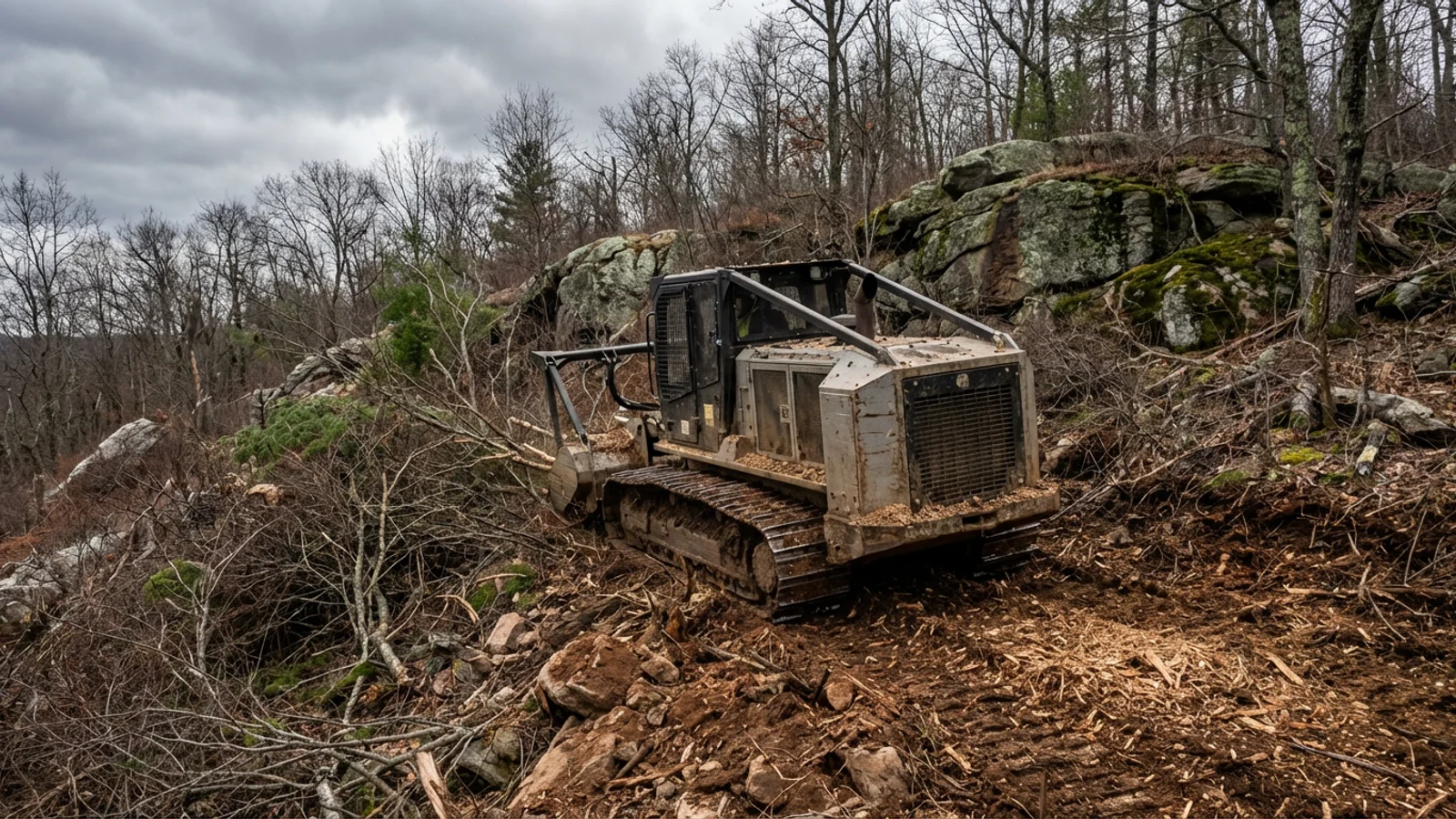
Hillside clearing starts with slope evaluation. We look at grade, footing, rock, access, runoff direction, and what is downslope of the work area. Some hillsides are wide and open enough for straightforward production. Others require more measured movement, staged access, or selective clearing to keep the job safe and the slope stable. The terrain tells us how aggressive the clearing can be.
Once the plan is set, the machine works through the growth while keeping weight distribution and travel path in mind. Tracked equipment helps spread the load more evenly than wheeled machines and gives better control on uneven ground. That matters on Ramapo foothill lots, ridge properties, and steep wooded parcels where loose soil, exposed rock, and side slope all influence how the job has to be handled.
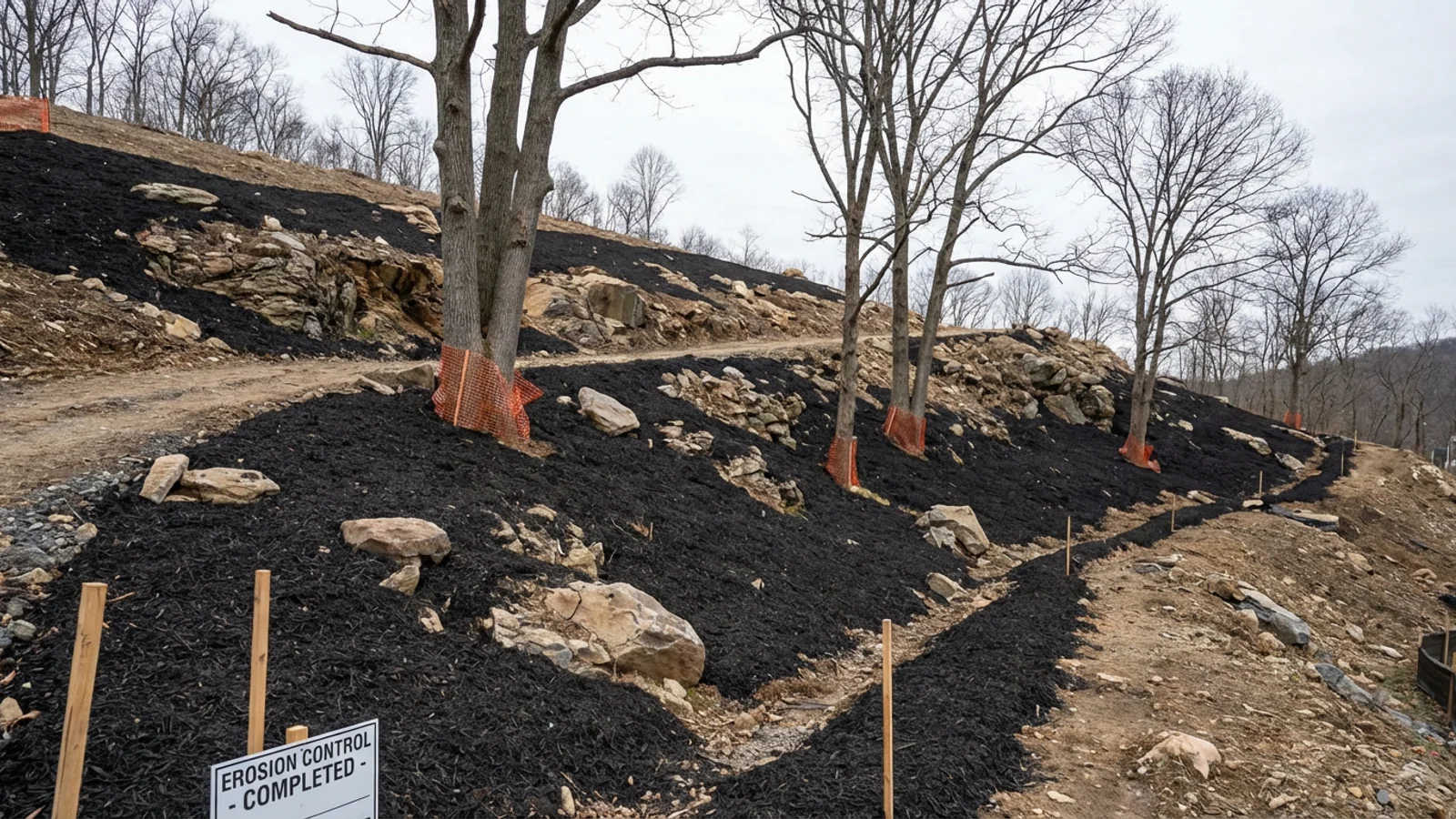
The finish matters even more on a hillside than it does on flat ground. When vegetation is mulched in place, the resulting layer helps protect the surface and reduce exposed soil. That is one of the reasons forestry-style clearing is so useful on steep New Jersey sites. Instead of peeling the slope open and leaving raw dirt, the work can leave behind a surface that is more stable and easier to manage against runoff and regrowth.
What's Included
- Clearing of brush, vines, saplings, and small trees on steep or uneven terrain where ordinary mowing or rough clearing is not practical.
- Use of tracked equipment suited for rocky slopes, ridge lots, hillside parcels, and uneven ground conditions.
- Selective clearing around trees, boundaries, drainage paths, and structures when the site calls for controlled slope work.
- On-site mulching of vegetation so the slope is not left with unstable piles or loose debris that still need to be handled.
- Planning around footing, access, runoff direction, and practical erosion concerns before the work begins.
- A finished result that improves access and visibility while helping keep the slope more stable than rough push clearing usually does.
Best For
- Wooded hillsides and backyard slopes that are too steep or rough for ordinary landscaping equipment.
- Highlands and ridge-area lots where brush growth is making the slope unusable or hard to inspect and maintain.
- Ramapo, ridgeline, and rocky terrain properties where low-ground-pressure tracked machines are a much better fit than wheeled gear.
- Owners who need sightlines, access, or fuel reduction on a slope without tearing the hillside open and exposing raw soil.
- Properties where other contractors have walked away because the grade, ledge, or uneven terrain makes the job more specialized.
Pricing Factors for Hillside & Steep Terrain Clearing
Hillside clearing is priced around more than acreage. Grade, footing, rock, access, and the need for controlled movement all affect productivity. A half-acre on a serious slope can take more time than a larger flat section because machine placement and safe travel become part of the work. That is why steep terrain jobs are rarely comparable to basic field clearing. If you want to understand why, our notes on why hillside clearing costs more explain the production side clearly.
Site finish also affects the price. If the goal is broad knockback on a manageable slope, the job may move at one pace. If you need selective work around tree groups, structures, retaining features, or narrow access sections, the machine has to operate more deliberately. We price hillside work based on real terrain conditions because that is what determines whether the finished slope is just cleared or actually well handled.
Why Brush Busters for Hillside Clearing
A lot of contractors do not like hillside work because the margin for error is smaller. Brush Busters takes on that terrain because we plan for it correctly. The combination of tracked equipment, operator-led site review, and an understanding of how slope affects clearing lets us handle properties that many standard clearing crews refuse or oversimplify.
We also understand that steep terrain work is not just about getting brush off the hill. It is about what the hill looks like and how it behaves afterward. A slope that is technically clear but unstable, raw, and washing out is not a finished job. We keep the long-term condition of the property in view, especially on steep New Jersey ground where erosion and runoff can become the next headache fast.
Where We Offer Hillside Clearing
We work across Hunterdon, Somerset, Warren, and Morris counties, with strong demand in Chester, NJ, Mendham, NJ, Bernardsville, NJ, Washington Township, Morris County, NJ, Lebanon Township, NJ. Hillside Clearing is a good fit for everything from tight residential lots to rough back acreage, depending on the scope and the access.
Before and After
Before
After
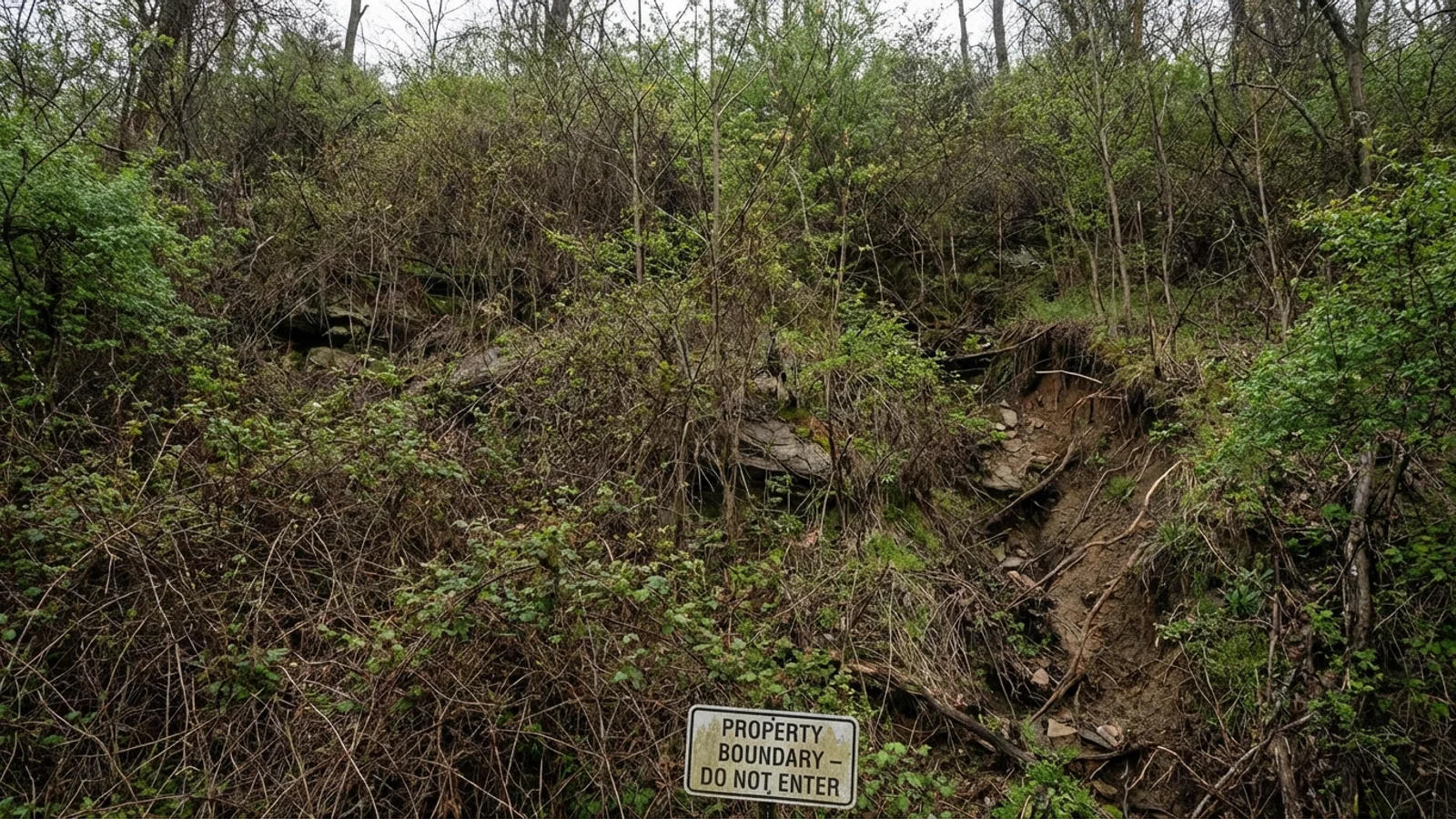
Typical hillside clearing result on steep New Jersey terrain
Common Questions
Can you clear steep hillsides in New Jersey?
Yes. We handle many steep hillside projects in New Jersey using tracked equipment and a slope-specific plan. Every site still needs to be evaluated for grade, footing, and safe access before the work is scheduled.
Why do other contractors turn down hillside clearing jobs?
Steep terrain changes everything about machine control, production speed, and risk. Some contractors are set up for flat-field work and do not want to operate on slopes with rock, runoff, or tight access. That is exactly why hillside clearing is a separate service for us.
Will hillside clearing cause erosion?
Not when it is handled correctly. In fact, mulching the vegetation in place can help protect the surface and reduce exposed soil. The wrong method can create erosion problems, which is why slope work needs to be planned carefully.
How much does hillside clearing cost?
Hillside clearing cost depends on grade, access, vegetation density, footing, and how selective the work needs to be. Because steep terrain slows production and raises complexity, it is typically priced differently than ordinary flat-ground clearing.
Can tracked equipment work on rocky slopes?
Yes, and that is one of the main reasons tracked equipment is so useful in New Jersey. Rocky slopes still have to be reviewed individually, but tracks generally provide better footing and pressure distribution than wheeled equipment on uneven ground.
Is forestry mulching a good choice for steep terrain?
Often yes. Forestry mulching works well on steep terrain because it clears and leaves a mulch layer in one pass. That combination can be very helpful for slope protection compared with methods that expose large areas of bare soil.
Can you clear around trees on a hillside?
Yes. Selective hillside work is common, especially where owners want to preserve canopy trees and only remove brush, ladder fuels, or small woody growth. That selective control is a big part of doing the slope correctly.
How long does hillside clearing take?
Timeline depends on the steepness of the terrain, the density of the vegetation, and how accessible the slope is. Some hillside projects are completed quickly, but steep terrain usually moves at a more deliberate pace than flat work.
Can hillside clearing improve fire safety or access?
Yes. Opening up steep overgrown ground can improve visibility, reduce heavy fuel load, and make access routes more workable. That is one reason hillside clearing often overlaps with defensible space work on wooded properties.
What services pair well with hillside clearing?
Hillside projects often overlap with Forestry Mulching, Brush Clearing, and Firebreaks & Defensible Space. Those services help address the slope itself, the edge conditions around it, and the broader access or risk goals tied to the property.
Related Services
Forestry Mulching
We grind brush, saplings, and small trees into mulch on the spot – no hauling, no burn piles, no mess.
Brush Clearing
Thick undergrowth, vines, and overgrown fence lines cleared down to clean, walkable ground.
Firebreaks & Defensible Space
Strategic clearing around homes, barns, driveways, and wooded edges to reduce wildfire risk and create defensible space.
Need the full New Jersey clearing picture?
Our complete guide walks through methods, costs, permits, regulations, invasive species, and how to choose the right approach before you commit to a job.
Need a Straight Answer on the Scope?
Tell us where the property is, what needs to go, and what you want to keep. We will walk the site and give you a clear next step.
Or call (908) 774-9235.