
Home / Land Clearing / Readington Township, New Jersey
Land Clearing in Readington Township, New Jersey
Readington is one of the largest townships in Hunterdon County — a spread-out patchwork of horse farms, preserved agricultural land, residential developments, and the open fields that host the New Jersey Festival of Ballooning every July. Cushetunk Mountain anchors the eastern skyline. The South Branch Raritan and Rockaway Creek cut through the lowlands. The lots run big and the clearing work runs bigger — pasture reclamation on ten-acre fields, fence line restoration on properties with a mile of fencing, and lot prep for new homes being built on subdivided farmland. We work Readington regularly because the scale of the properties matches the scale of the equipment.
What We See on Readington Properties
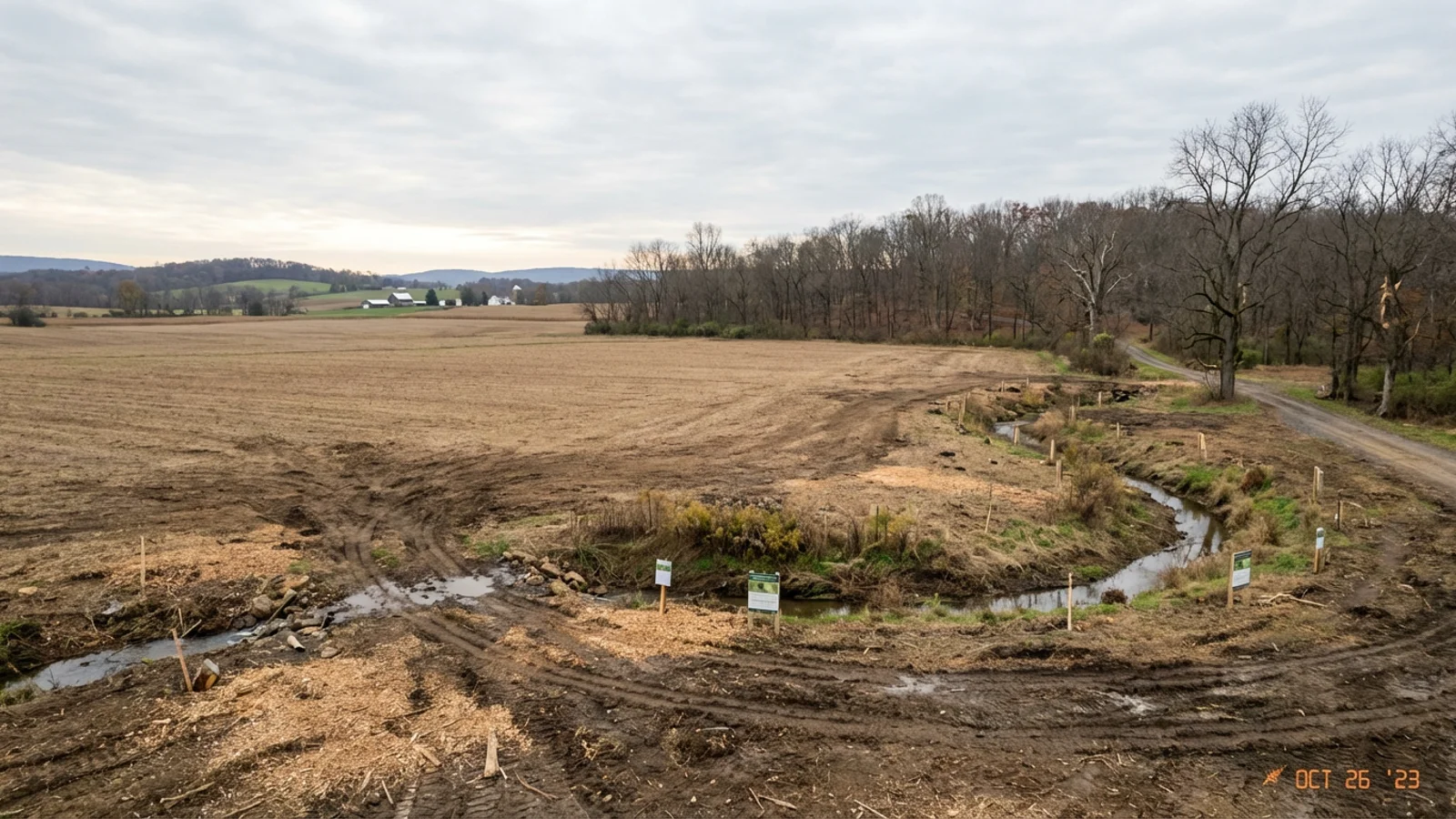
Readington property sizes range widely. The preserved farmland parcels run ten to fifty-plus acres. Active horse properties sit on three to fifteen acres. Newer residential developments — particularly in the Whitehouse Station and Three Bridges areas — have lots from half an acre to two acres. The terrain is gently rolling with a few notable features: Cushetunk Mountain creates a distinct wooded ridgeline on the eastern side, and the Rockaway Creek floodplain cuts a low, wet corridor through the center of the township.
The soils on the upland areas are well-drained silt loam that supports both agriculture and aggressive brush colonization once maintenance stops. The lowland soils along Rockaway Creek are heavier, wetter, and prone to seasonal flooding that deposits knotweed fragments and spreads phragmites.
Autumn olive is the dominant colonizer on Readington's idle agricultural fields. The township has a large inventory of preserved farmland where the agricultural use has lapsed — the development rights are gone, but so is the farmer, and the fields are filling in. Multiflora rose claims every fence row, hedgerow, and wood edge. Phragmites fills the wet areas along Rockaway Creek and the stormwater basins in newer developments. On the slopes of Cushetunk Mountain, oriental bittersweet and barberry are the primary invasives in the forest understory.
Common Land Clearing Projects in Readington
Agricultural field reclamation is the project type that defines Readington. The township's preserved farmland inventory means there are hundreds of acres of fields that were in production ten to twenty years ago and are now brush. The preservation easement keeps them from being developed, but it doesn't keep them mowed. We clear these fields back to open ground so they can be returned to hay production, leased for grazing, planted in cover crops, or maintained as meadow.
Horse property fence line and pasture work mirrors what we do in neighboring Tewksbury but with a different feel — Readington's horse properties tend to be slightly smaller and more mixed-use, with a combination of pasture, paddock, riding ring, and wooded acreage on a single parcel. The fence line work is the same: multiflora rose and saplings cleared from both sides of the fence row so the fencing is visible and functional.
Residential lot clearing in the Whitehouse Station and Three Bridges areas serves homeowners with one-to-two-acre lots where the wooded backyard has become an impenetrable wall of undergrowth. These are properties where maintained lawn transitions abruptly to wild brush at the edge of the tree line, and the owner wants to push that transition back by fifty to a hundred feet.
Stormwater basin maintenance is a niche but recurring need in Readington's newer developments. Detention and retention basins that were clean when the development was built are now overgrown with phragmites, cattails, and brush that impede drainage function. We clear them back to design grade.
Local Considerations
Readington Township has portions within the Highlands Planning Area, primarily in the northern sections closer to the Tewksbury border. The southern and eastern areas — including most of the Whitehouse Station and Three Bridges communities — are outside the Highlands boundary. Routine clearing work is generally unaffected in either zone, but development-related clearing on Planning Area parcels should be checked against the Highlands overlay.
Agricultural preservation easements are widespread in Readington. These easements typically encourage agricultural use of the preserved land, which means clearing for pasture restoration, hay field reclamation, and fence line maintenance is generally consistent with easement intent. Clearing wooded portions of preserved parcels may be restricted. Review your specific easement language.
The Rockaway Creek and its tributaries carry NJ DEP riparian buffer requirements. The buffer zone width depends on the waterway classification. Properties in the floodplain — especially in the low-lying areas between Whitehouse Station and Three Bridges — may have additional flood hazard area restrictions that affect clearing plans near the waterway.
Hunterdon County's Soil Conservation District requires sediment control plans for projects exceeding 5,000 square feet of disturbance. For large agricultural field reclamation projects, this threshold can be exceeded. Forestry mulching's minimal-disturbance profile usually keeps it under the requirement, but we confirm on a project-by-project basis.
Common Questions
How much does land clearing cost in Readington, NJ?
Residential clearing ranges from $2,000 to $7,000. Large agricultural reclamation is quoted by acreage. Get a free estimate for your Readington property.
Can you clear preserved farmland in Readington?
In most cases, yes. Agricultural easements typically allow clearing for pasture, hay, and fence lines. Review your easement language for wooded-area restrictions. Learn about our pasture reclamation service.
What invasive species are most common in Readington?
Autumn olive fills idle fields. Multiflora rose claims fence rows. Phragmites colonizes Rockaway Creek and stormwater basins. Barberry and bittersweet dominate Cushetunk Mountain. See our invasive species removal services.
How long does it take to clear a ten-acre field in Readington?
A ten-acre field with moderate brush takes three to five days. Heavier growth takes longer. We provide detailed timelines for large-acreage projects.
Can you clear stormwater basins in Readington developments?
Yes. We clear overgrown detention and retention basins filled with phragmites and brush. Learn about our HOA and municipal services.
Is Readington in the NJ Highlands?
Parts of northern Readington are in the Highlands Planning Area. Most of the township is outside the boundary. Routine clearing is generally unaffected. Read our Highlands Act guide.
Readington acreage going to waste?
Whether it's a preserved field that needs reclaiming or a backyard that needs taming, we'll give you a plan and a price.
Or call (908) 774-9235.