
Home / Field Notes — Land Clearing Knowledge Base / Fire Prevention and Defensible Space in New Jersey
Fire Prevention and Defensible Space in New Jersey
Published April 4, 2026 by Brush Busters • Last reviewed April 4, 2026
New Jersey isn’t California. But the state’s wildfire risk is real, concentrated, and growing. The NJ Forest Fire Service responds to over 1,000 wildfires per year, burning an average of 7,000+ acres annually. The most vulnerable areas in our service area are the Highlands ridge communities — High Bridge, western Roxbury, Chester, and the wooded neighborhoods where homes sit in or adjacent to continuous forest.
The wildfire-urban interface (WUI) in New Jersey is expanding as more homes are built in and near forested areas. Drought years — which are becoming more frequent — increase fire risk across the Pine Barrens, the Highlands, and the Watchung range. Defensible space — the managed zone of reduced vegetation around a structure — is the single most effective measure a property owner can take to protect their home from wildfire.
What defensible space means
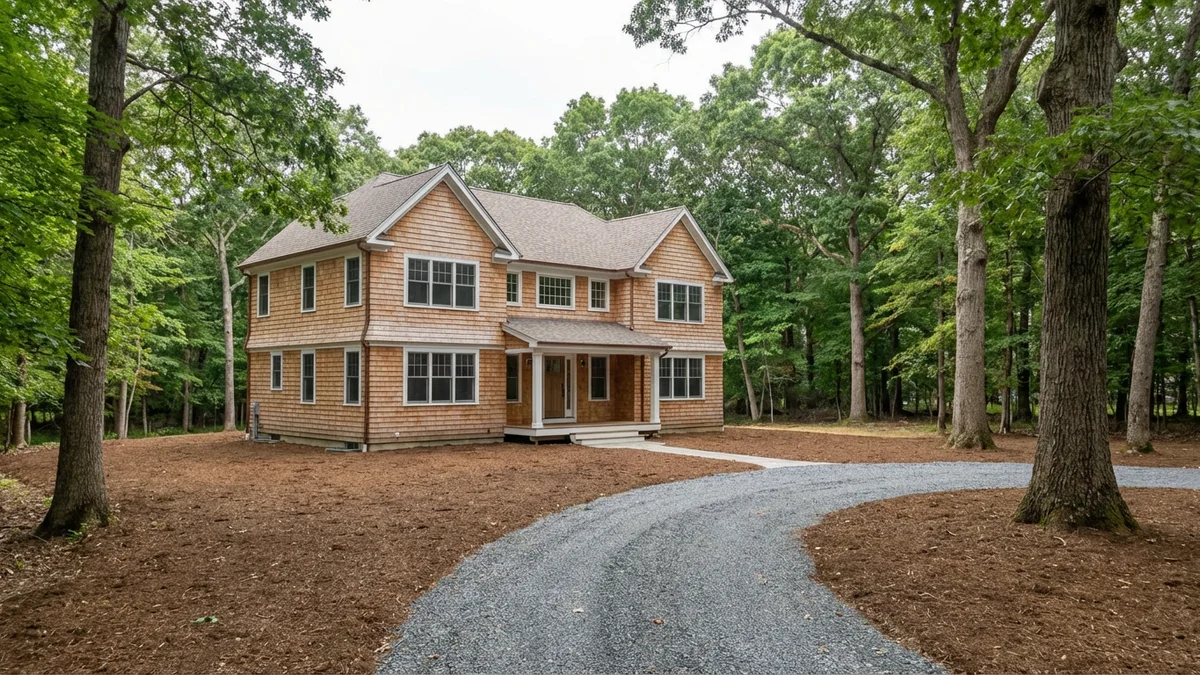
Defensible space isn’t a firebreak — it’s not a bare strip of dirt around your house. It’s a series of vegetation management zones that reduce the intensity and speed of fire as it approaches a structure. The concept comes from wildfire research that consistently shows homes with defensible space are dramatically more likely to survive a wildfire than those without it.
Zone 1: Immediate zone (0–5 feet from the house). No combustible vegetation, mulch, or debris in direct contact with the structure. This includes clearing leaves from gutters, removing dead vegetation against the foundation, keeping firewood stacks away from the house, and eliminating any brush growing against walls or under decks.
Zone 2: Near zone (5–30 feet from the house). Managed vegetation with spacing between trees and shrubs. Remove dead plants, trim lower branches to 6–10 feet above ground on remaining trees, space shrubs so they don’t form continuous fuel paths. This zone should be clean enough that fire can’t carry through it at full intensity.
Zone 3: Extended zone (30–100 feet from the house). Reduce brush density, remove dead wood, thin the understory, and break up continuous fuel corridors. This doesn’t need to be manicured — it needs to be open enough that a fire moving through it loses intensity before reaching Zone 2.
Zone 4: Buffer zone (100+ feet, where applicable). On larger properties backed by continuous forest, reducing fuel loads beyond 100 feet further decreases fire approach intensity. This is where forestry mulching of the understory — removing the barberry, multiflora rose, and brush ladder fuels — has the most impact per acre.
Why this matters in NJ specifically
The Highlands and Watchung ridge. Homes built on wooded hillsides face compound risk: slope accelerates fire spread (fire moves uphill faster than on flat ground), the continuous forest canopy provides unbroken fuel, and the steep terrain makes firefighter access difficult. Properties in these areas benefit most from defensible space.
Drought years. NJ experienced significant drought conditions in recent years that raised fire danger across the northern counties. The state’s deciduous forests, which normally resist fire when the leaf litter is moist, become vulnerable when drought dries the litter layer. Defensible space is insurance against the year the drought hits.
NJ Pinelands. While not in our service area, the Pinelands wildfire risk illustrates the principle: fire-adapted landscapes will burn. The question is whether your structure survives when it does. NJ’s Highlands and Watchung forests aren’t as fire-prone as the Pinelands, but the risk is non-zero and increasing.
Insurance. Some insurance carriers in fire-prone areas are beginning to require defensible space documentation — or offering premium reductions for properties that maintain it. This trend is accelerating nationally and will likely reach NJ’s WUI communities. Creating defensible space now may help with future insurance negotiations.
How forestry mulching creates defensible space
Forestry mulching is the most efficient method for creating defensible space on NJ properties because it handles the exact vegetation that constitutes fire fuel: dense understory brush, dead wood, sapling thickets, vine tangles, and the invasive species that create continuous fuel ladders from the ground into the canopy.
The machine clears Zones 2, 3, and 4 in a single operation — removing the brush while preserving the canopy trees that provide shade, screening, and property value. The result is an open, parklike understory where fire can’t build the intensity needed to crown into the treetops.
The mulch layer left behind is a counterintuitive fire benefit. While mulch can burn if hit by direct flame, a two-to-four-inch layer of decomposing forestry mulch is significantly less combustible than the standing brush it replaced. The living brush contained volatile oils, dry dead material, and air gaps that feed flame. The mulch is dense, moist (it holds rainfall), and in contact with the ground. It’s a fuel reduction, not a fuel addition.
For Zone 1 (immediately around the house), forestry mulching is too aggressive — that zone needs hand work: raking, debris removal, gutter cleaning, and creating a non-combustible perimeter. The mulcher handles everything from Zone 2 outward.
Costs for defensible space clearing
| Zone | Typical area | Cost range |
|---|---|---|
| Zone 2 (5–30 ft perimeter) | 2,000–5,000 sq ft | $800–$2,000 |
| Zone 3 (30–100 ft, understory thin) | 0.25–0.75 acre | $1,500–$3,500 |
| Zone 4 (100+ ft, production clearing) | 1–3 acres | $2,500–$8,000 |
| Complete Zones 2–4 | 1–4 acres total | $3,000–$10,000 |
Zone 1 (0–5 feet) is hand work — either DIY or hired out to a landscaper. It’s not forestry mulcher territory.
For properties in the Highlands and Watchung ridge areas where fire risk is highest, defensible space clearing is an investment in property protection and potential insurance savings.
Common Questions
Does NJ require defensible space around homes?
NJ doesn’t mandate it statewide, but the NJ Forest Fire Service recommends it and some insurers are beginning to require it. Creating defensible space is voluntary but increasingly practical.
How much does defensible space clearing cost in NJ?
Zones 2–4 cost $3,000–$10,000 for initial clearing. Annual maintenance mowing keeps it effective going forward. Get a free estimate.
Does mulch from clearing create a fire hazard?
No — mulch is far less combustible than the standing brush it replaced. In Zone 1 (0–5 ft from the house), rake mulch away. In outer zones, it’s a fuel reduction.
How often do I need to maintain defensible space?
Annual mowing of the cleared zones. Zone 1 (immediate perimeter) needs more frequent attention — gutter cleaning, debris removal, and maintaining the non-combustible buffer.
Will defensible space lower my insurance premium?
It may — some carriers offer premium reductions and others factor it into coverage decisions. Contact your insurer to ask. The trend toward requiring it is accelerating.
Is wildfire really a risk in New Jersey?
Yes — NJ has 1,000+ wildfires per year burning 7,000+ acres. The Highlands and Watchung ridge communities face the highest risk.
Can I create defensible space on a steep wooded lot?
Yes — and it matters more on slopes because fire moves uphill faster. Our tracked equipment handles slopes up to 45%. Learn about hillside clearing.
What's the difference between defensible space and a firebreak?
A firebreak is bare ground to stop fire spread (wildland tool). Defensible space is graduated vegetation management around a structure (homeowner tool). For NJ residential properties, defensible space is the right approach.
Related Services
Forestry Mulching
We grind brush, saplings, and small trees into mulch on the spot – no hauling, no burn piles, no mess.
Brush Clearing
Thick undergrowth, vines, and overgrown fence lines cleared down to clean, walkable ground.
Hillside Clearing
Steep terrain and rocky slopes cleared safely with tracked, low-ground-pressure equipment.
Helpful Resources
Homeowners
Related Articles
NJ Highlands Act: What It Means for Land Clearing on Your Property
How the NJ Highlands Act affects land clearing: Preservation Area basics, affected counties, what to check, and why your address matters.
See NJ Highlands Act: What It Means for Land Clearing on Your Property
Tick Prevention Through Land Clearing in New Jersey
Land clearing reduces tick habitat on NJ properties. How barberry removal, brush clearing, and understory management lower Lyme disease risk in your yard.
Want the full New Jersey land clearing playbook?
This article covers one piece of the puzzle. The complete guide ties together methods, costs, permits, terrain, and contractor selection in one place.
Protect your home from what's growing around it.
Defensible space clearing reduces wildfire risk and may lower your insurance costs. Free estimates.
Or call (908) 774-9235.