
Home / Services / Right-of-Way Clearing
Right-of-Way Clearing in New Jersey
Right-of-way clearing is about keeping long, linear areas functional. In New Jersey, that usually means private access roads, utility easements, shared drive corridors, municipal paths, drainage runs, and pipeline or service-line routes that cannot stay buried under brush. These are not just cosmetic cleanups. When a right-of-way closes in, access gets harder, sightlines disappear, maintenance gets more expensive, and the corridor becomes more difficult to inspect or use.
Brush Busters clears those corridors with a practical, operator-led approach. We work the vegetation back so the route is visible, passable, and easier to maintain without creating giant debris piles along the way. That might mean opening a private road back up for vehicles, restoring access along a utility easement, or keeping a shared drive from disappearing under saplings and vines. Our utility easement clearing guide and driveway access clearing article cover those two use cases in more detail. The exact goal changes from site to site, but the standard is the same: a corridor that works again.
How Right-of-Way Clearing Works
Right-of-way jobs usually start with identifying the corridor limits and the practical use of the route. A utility easement needs a different finish than a private access road or hunting-lane entrance. We look at width, vegetation type, turning points, sightline issues, grade changes, and whether specific trees or edge growth should remain in place.
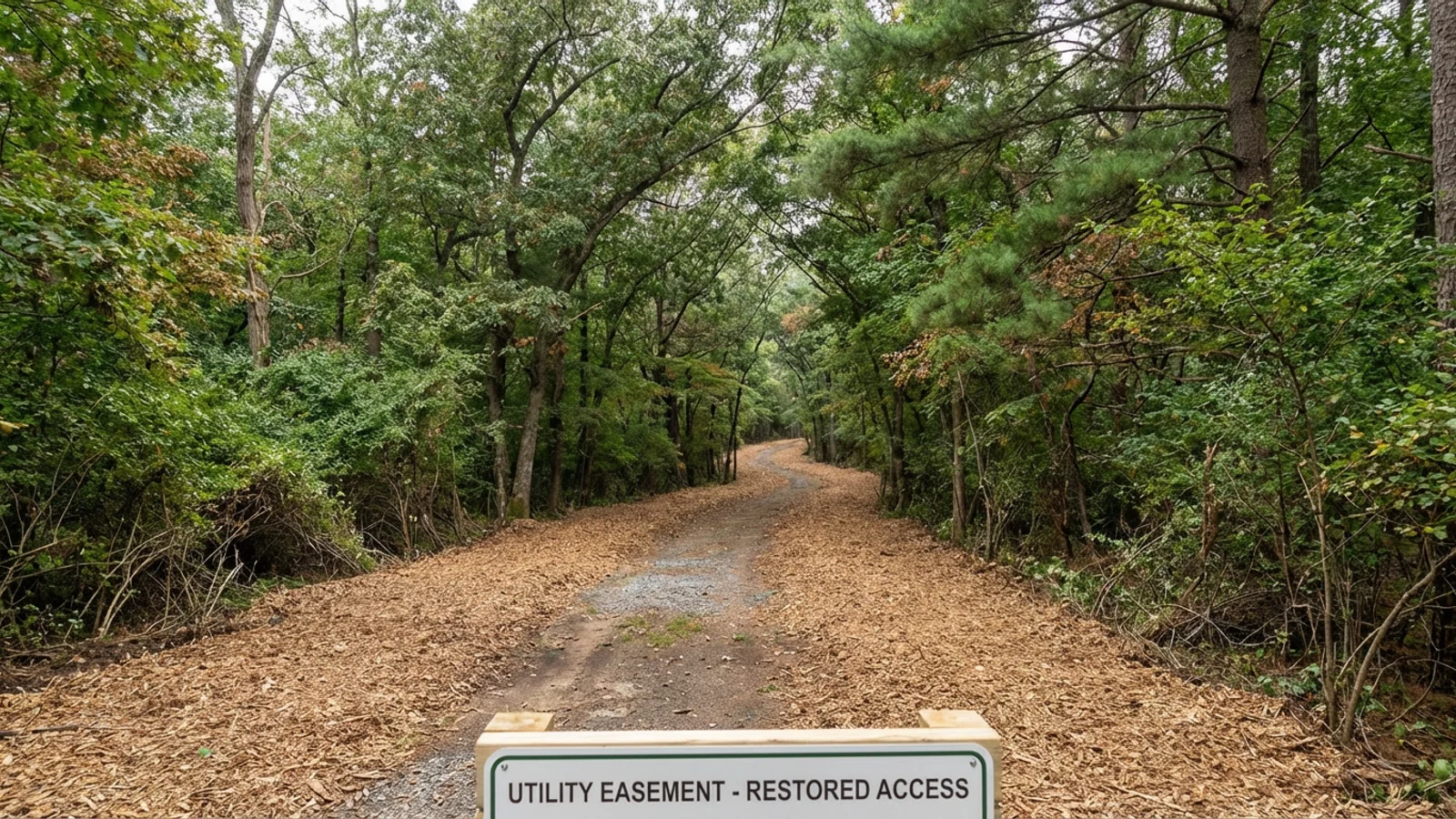
The clearing itself is usually done as a controlled pass along the route, opening the corridor in sections and keeping material managed as we go. On access roads and private drives, that means working the brush back far enough for visibility and maintenance without chewing into every adjacent tree line. On service corridors and easements, it often means restoring inspection access and workable width while respecting terrain, structures, and known utilities.
New Jersey right-of-way work often involves utility considerations, slope changes, water bars, culverts, rock ledge, and soft edges. That is why we do not treat it like ordinary field mowing. The route has to be cleared in a way that supports long-term access. Done right, the finished corridor is easier to inspect, easier to maintain, and less likely to become a problem again the next growing season.
What's Included
- Clearing of brush, vines, saplings, and overgrowth from access roads, shared drives, easements, and linear service corridors.
- Opening up corridor width and restoring sightlines at bends, entries, culvert approaches, and blocked access points.
- Selective edge work around existing roads, utility features, gates, drainage structures, and tree lines worth preserving.
- On-site mulching of woody vegetation so the route is not left with brush piles narrowing the cleared path.
- Practical review of access, grade, and known utility constraints before work begins.
- A finished corridor that is easier to inspect, travel, maintain, and keep under control going forward.
Best For
- Private roads and shared driveways that are narrowing under saplings, thorn brush, and climbing vines.
- Utility easements and service corridors that need vegetation knocked back for access, inspection, or maintenance.
- Long property entrance roads where edge growth is blocking visibility and making storm cleanup more difficult.
- Municipal paths, common-area runs, or large private corridors that need width restored without heavy disturbance.
- Rural and semi-rural parcels where access routes are too overgrown for trucks, trailers, tractors, or service crews.
Pricing Factors for Right-of-Way Clearing
Right-of-way clearing is usually priced around corridor length, target width, vegetation density, and access. A straight run with moderate brush moves differently than a twisting route with steep shoulders, wet crossings, utility constraints, and heavy saplings. We also look at whether the job is a one-time reopening or part of a broader maintenance plan, because that changes how aggressively the corridor needs to be cut back.
The type of route matters too. A private road or shared driveway often needs careful edge control and better sightline shaping at turns. A utility easement may need consistent width over a longer run. A municipal or HOA corridor might involve multiple entry points, staging considerations, or public-facing visibility standards. Those details affect machine time, setup, and the final number, which is why we price the actual corridor instead of guessing from the road.
Why Brush Busters for Right-of-Way Clearing
Corridor work is easy to overdo and easy to underdo. If it is too light, the route is still half blocked. If it is too aggressive, the edges look rough, unstable, or needlessly torn back. Brush Busters approaches right-of-way clearing with the actual use of the corridor in mind. We clear enough for function, visibility, and access while keeping the result controlled and maintainable.
That owner-operated approach is especially useful when the route is tied to neighbors, tenants, utility access, or shared responsibility. We can walk the line, talk through where the clearing should stop, and keep the work consistent from one end of the corridor to the other. The result is a route that feels intentionally maintained rather than randomly hacked open.
Where We Offer Right-of-Way Clearing
We work across Hunterdon, Somerset, Warren, and Morris counties, with strong demand in Washington Township, Warren County, NJ, Readington, NJ, Tewksbury, NJ, Lebanon Township, NJ, Washington Township, Morris County, NJ. Right-of-Way Clearing is a good fit for everything from tight residential lots to rough back acreage, depending on the scope and the access.
Before and After
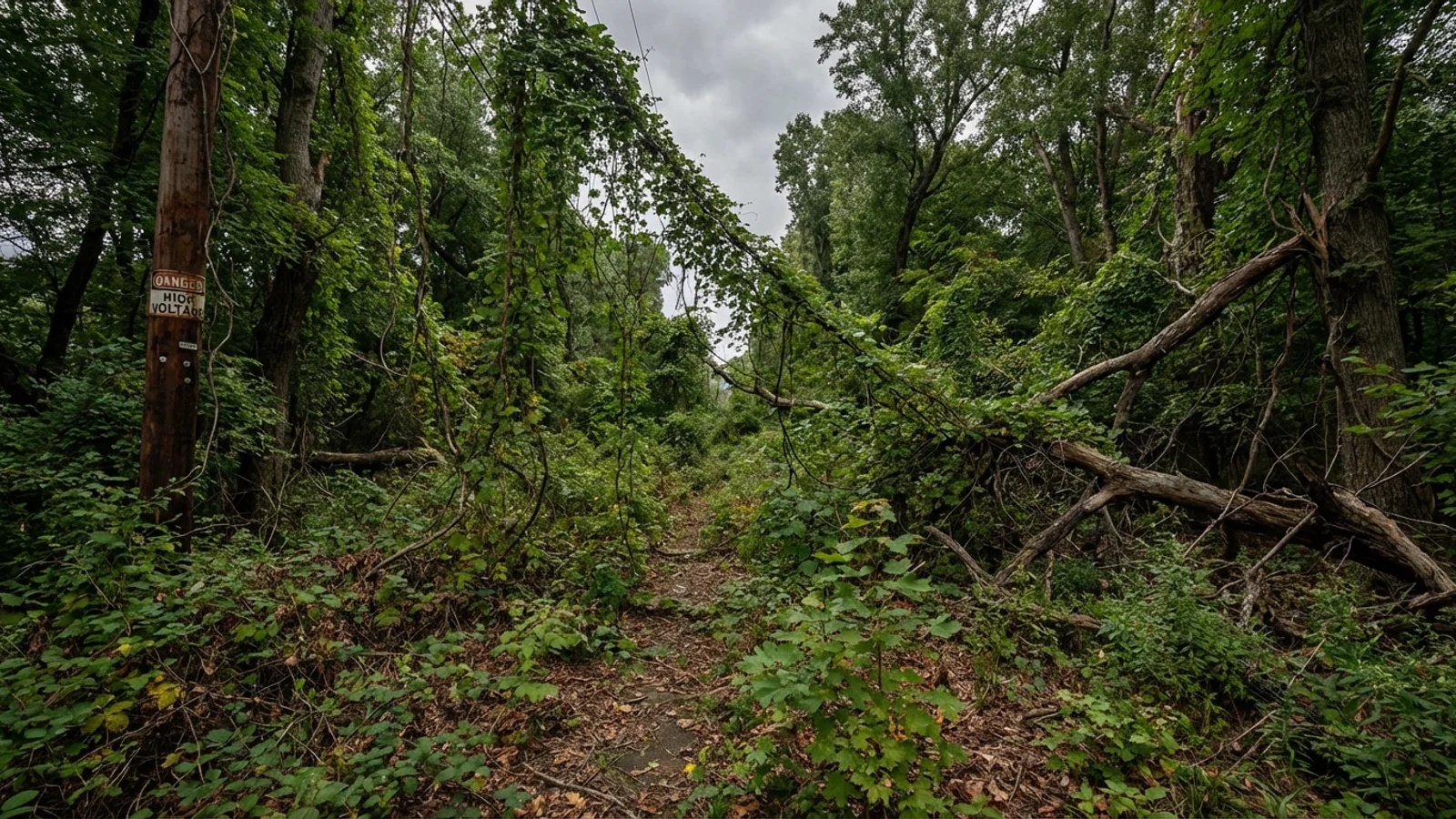
Before
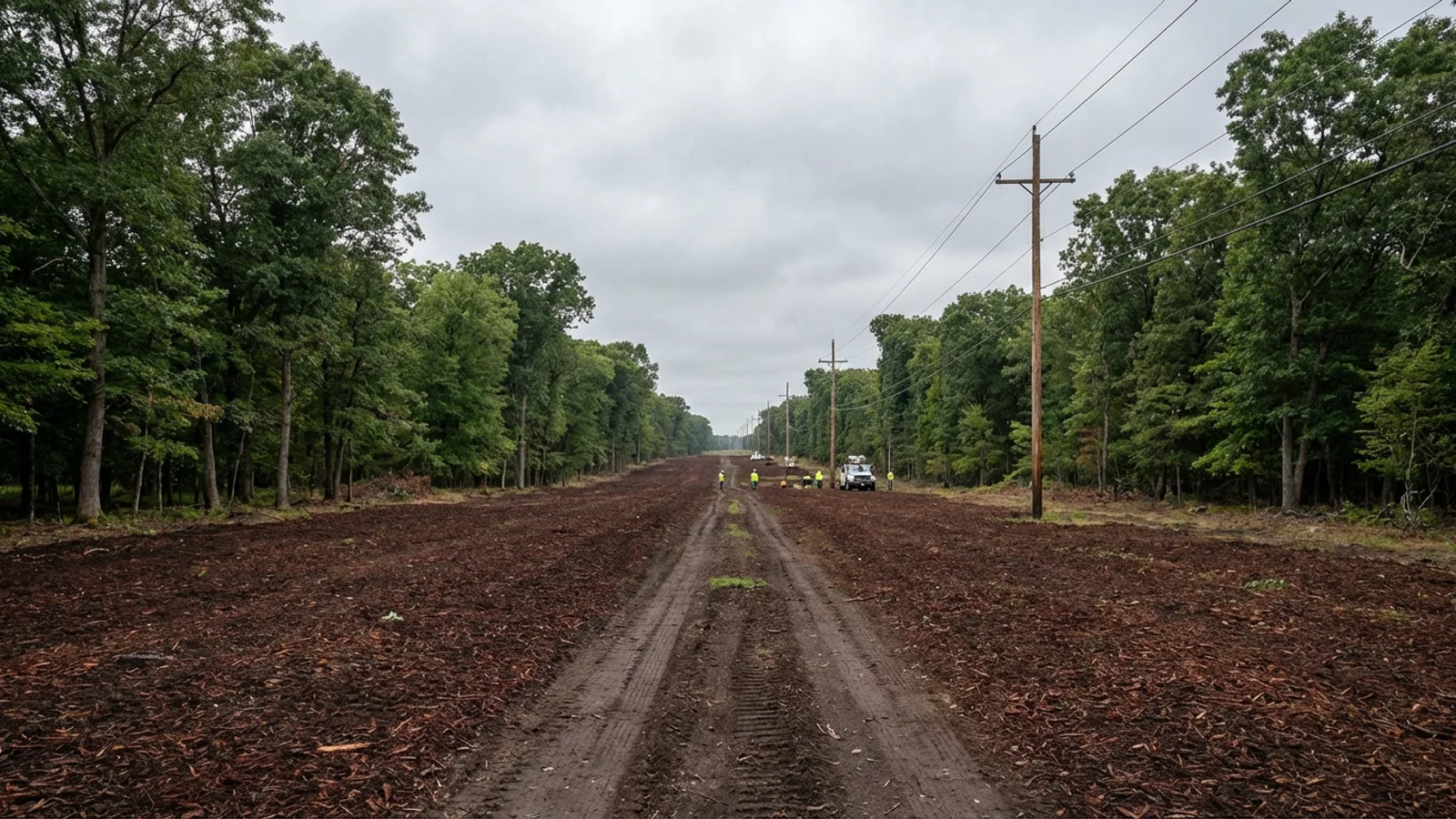
After
Typical right-of-way clearing result from blocked corridor to usable access route
Common Questions
What is right-of-way clearing?
Right-of-way clearing is the removal of brush, saplings, vines, and overgrowth from a corridor that needs to stay open for access, visibility, inspection, or maintenance. Common examples include private roads, shared drives, utility easements, and service corridors.
How much does right-of-way clearing cost?
Cost depends on corridor length, target width, terrain, vegetation density, and access for equipment. A short blocked driveway and a long utility run are two very different jobs. We quote the actual corridor after reviewing the site.
Can you clear utility easements in New Jersey?
Yes, when the easement access and scope are appropriate. We review the corridor, discuss known utilities, and make sure the work is compatible with the route and its purpose before starting.
Do you clear private roads and shared driveways?
Yes. Private roads and shared drive corridors are common right-of-way jobs for us. We can reopen the route, improve sightlines, and knock back edge growth so the road is easier to use and maintain.
How wide should a right-of-way be cleared?
That depends on what the corridor is for. Vehicle routes, utility runs, and walking paths all call for different widths. We usually decide width by the actual use of the corridor, the edge conditions, and how much maintenance room is needed afterward.
Can you clear steep access corridors?
Yes, if the grade, footing, and route conditions make the work safe. New Jersey right-of-way work often includes slope changes, drainage features, and rock. We review those details before committing to the job.
Will you leave debris piles along the corridor?
No. On most jobs, vegetation is mulched in place so the corridor is not narrowed by stacked debris. That is one of the biggest advantages of using mulching equipment for right-of-way work.
How often should a right-of-way be maintained?
That depends on growth pressure and species. Some corridors need periodic maintenance every year or two, especially where vines and fast saplings are aggressive. Others stay open longer once the initial heavy overgrowth is removed.
Can you clear municipal paths or HOA access routes?
Yes. We can clear common-area routes, municipal-style paths, or HOA corridors where access, visibility, and a controlled finished look all matter. Those jobs usually start with a walkthrough and a clear limit of work.
What services pair well with right-of-way clearing?
Right-of-way work often overlaps with Land Clearing / Lot Prep, Trail Cutting, or Commercial Land Clearing depending on what the corridor supports. If the route leads to a broader project area, we can help connect the corridor scope to the next phase of work.
Related Services
Land Clearing / Lot Prep
Residential and small commercial lots cleared and prepped for building, grading, or landscaping.
Commercial Land Clearing
Forestry mulching and site clearing for builders, developers, municipalities, and HOA common areas across New Jersey.
Trail Cutting
Private hiking trails, ATV paths, hunting lanes, and walking routes cut clean with a durable mulched surface.
Brush Clearing
Thick undergrowth, vines, and overgrown fence lines cleared down to clean, walkable ground.
Need the full New Jersey clearing picture?
Our complete guide walks through methods, costs, permits, regulations, invasive species, and how to choose the right approach before you commit to a job.
Need a Straight Answer on the Scope?
Tell us where the property is, what needs to go, and what you want to keep. We will walk the site and give you a clear next step.
Or call (908) 774-9235.