

Home / Fence Line Clearing
Fence Line Clearing in New Jersey
Fence lines don’t stay clean on their own. A post-and-rail fence that was fully visible when it was installed can be buried under multiflora rose, saplings, and vines within two or three seasons of missed maintenance. By the time most property owners call us, they can’t see their fencing at all — it’s somewhere inside a wall of thorns that’s six feet tall and ten feet wide. We clear both sides of the fence row, grind everything at ground level, and give you back a fence you can actually inspect, maintain, and be proud of. This is one of the most common services we provide across Hunterdon, Somerset, Warren, and Morris counties — especially on horse properties, farms, and large residential lots where fencing runs hundreds or thousands of feet.
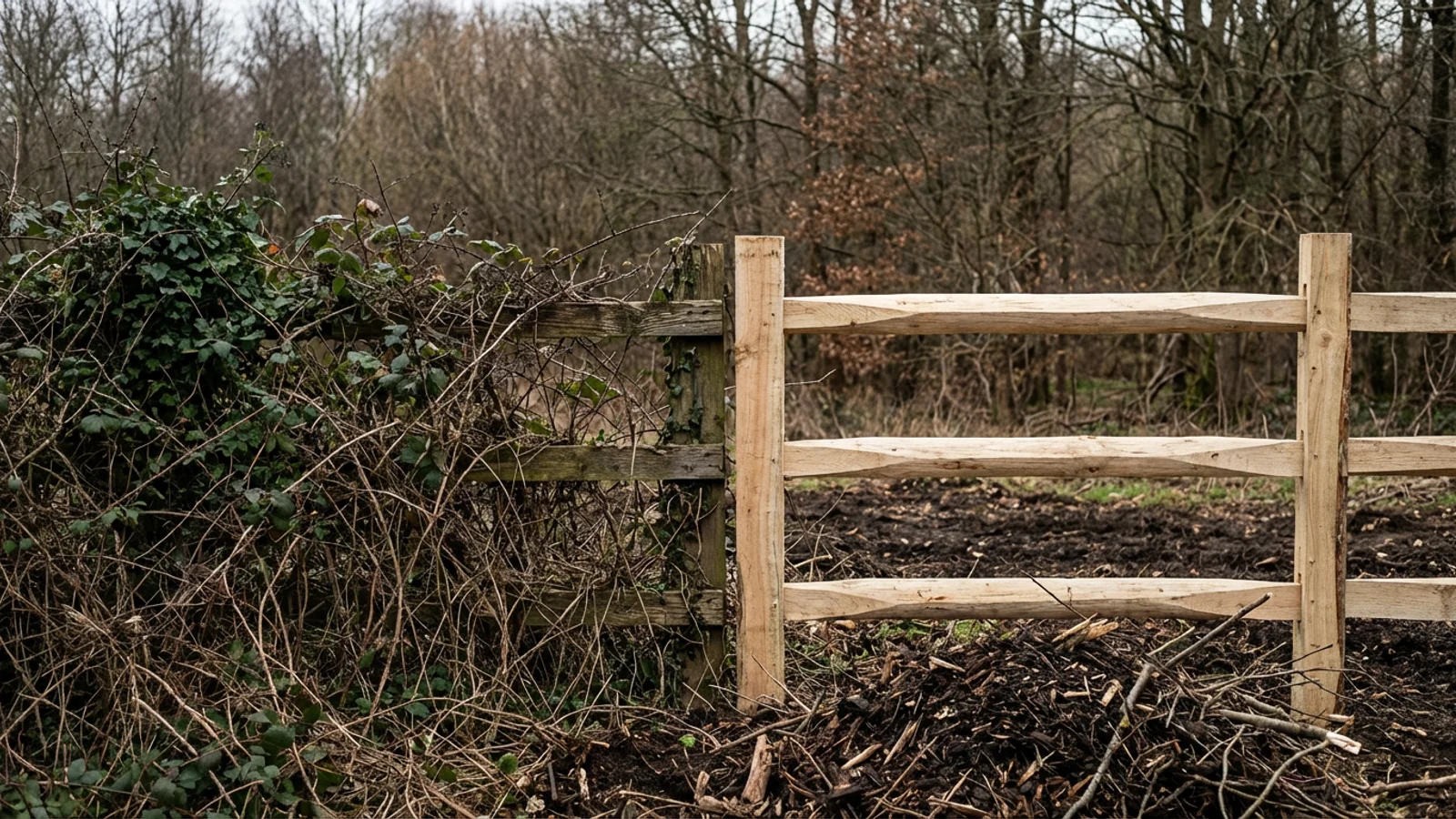
How Fence Line Clearing Works
Fence line clearing with a forestry mulcher is a different operation than open-field clearing. The machine runs parallel to the fence, processing brush and saplings on one side at a time. Our operators are experienced at working close to fencing — the mulcher head operates within inches of posts and rails without making contact. We clear a swath of ten to twenty feet on each side of the fence, depending on how far the brush has encroached and how much room you want.
The mulcher grinds everything — multiflora rose canes, sapling trunks, vine tangles, deadfall — at ground level. The thorns, the branches, the root crowns all go through the machine and come out as mulch that settles onto the ground in a layer two to four inches deep. That mulch suppresses regrowth and keeps the fence row cleaner for longer than if we left bare soil.
On properties with multiple paddock fences and cross-fencing, we plan the work sequence in advance to minimize gate crossings and reduce wear on high-traffic ground between paddocks. The equipment enters and exits through designated points rather than driving back and forth across maintained pasture.
After the clearing pass, you’ll see your fence for the first time in years — every post, every rail, every section of wire. That’s when most owners discover they have repair work to do: leaning posts, broken rails, sagging wire. We don’t do fence repair, but we make it possible for your fence contractor to see what needs fixing and access every foot of the line.
What's Included
Every fence line clearing project includes grinding of all brush, saplings, vines, and invasive species along both sides of the fence row to a depth of ten to twenty feet per side. We grind root crowns at ground level to slow regrowth. All material is mulched in place — there’s nothing to haul, burn, or pile. Stumps within the clearing swath are ground flush with the ground so the area is mowable going forward. We work around the fence itself without damaging posts, rails, boards, or wire. On longer runs, we clear continuously along the full length rather than working in disconnected sections.
What’s not included: fence repair, fence removal, or fence installation. We also don’t apply herbicide — but we can advise on follow-up treatment for invasive species that are likely to resprout, and we can recommend contractors who handle that work.
Best For
Horse properties with post-and-rail fencing — This is our most common fence line client. Multiflora rose consumes post-and-rail fencing across Hunterdon and Somerset counties faster than any other invasive. The thorns create a hazard for horses, the growth pushes rails apart and leans posts over, and the fence becomes uninspectable — you can’t see damage until it’s too late. We restore full visibility and access along every foot.
Farms with wire or board fencing — Agricultural fence lines that separate pastures, mark property boundaries, or line township roads get overgrown with rose, autumn olive, saplings, and wild grape. The brush expands the hedgerow from a few feet to twenty or thirty feet wide, consuming productive field acreage on both sides every year.
Residential properties with lot-line fencing — Homeowners on larger lots in Morris, Somerset, and Hunterdon counties often have perimeter fencing that’s disappeared under brush. The fence is still there — it’s just inside a wall of vegetation that the neighbor can see from their side and you can’t see from yours.
Properties being prepared for new fencing — If you’re planning to install new fencing, the line needs to be cleared first. We clear the route to bare ground so the fence installer has a clean, accessible path to work from.
What It Costs
Fence line clearing is priced based on total linear footage and the severity of the overgrowth. A thousand-foot fence row with moderate multiflora rose and saplings is a different project than a thousand-foot hedgerow that’s expanded to thirty feet wide with dense brush on both sides.
For typical residential and horse property fence lines in our service area, expect pricing in the range of $2,500 to $6,000 for runs of five hundred to two thousand linear feet with moderate overgrowth. Larger agricultural properties with fence lines running a quarter mile or more are priced individually based on linear footage and condition.
The factors that affect cost: total length of the fence line, width of the overgrowth on each side, density and species of the brush (multiflora rose is slower to process than clean saplings because of its thorny, tangled growth pattern), terrain along the fence line (flat versus sloped), and access for equipment (can we drive directly to the fence or do we need to cross fields and gates to reach it).
We provide a fixed project price after walking the fence line. No hourly billing, no per-day rates.
Why Brush Busters for Fence Line Clearing
Fence line work is a precision job, and precision comes from experience. We clear fence lines every week across Hunterdon, Somerset, Warren, and Morris counties — on horse properties in Tewksbury and Bedminster, on farms in Alexandria and Mansfield, on residential estates in Mendham and Bernardsville. The operators who run our equipment have cleared thousands of linear feet of fence row and know how to work within inches of posts and rails without making contact.
The forestry mulching method itself is what makes this work practical. Hand-clearing a thousand-foot fence row buried under multiflora rose would take a crew days and leave them bleeding from thorns. A brush hog can’t work close enough to the fence to clear the base. A chainsaw crew creates piles that need hauling. The mulcher processes everything — thorns and all — in a single pass and leaves nothing behind but clean ground and a protective mulch layer.
Where We Offer Fence Line Clearing
We provide fence line clearing across our entire service area — Hunterdon, Somerset, Warren, and Morris counties. The heaviest demand comes from the equestrian communities in Tewksbury, Bedminster, Chester, Readington, and Peapack-Gladstone, where post-and-rail fencing is standard and multiflora rose is relentless. We also clear agricultural fence lines in Alexandria, Mansfield, Lebanon Township, and throughout Warren County’s farming communities.
If you’re not sure whether your property is in our range, call and ask. We can usually tell from a quick phone conversation whether the project makes sense for our equipment and schedule.
Before and After
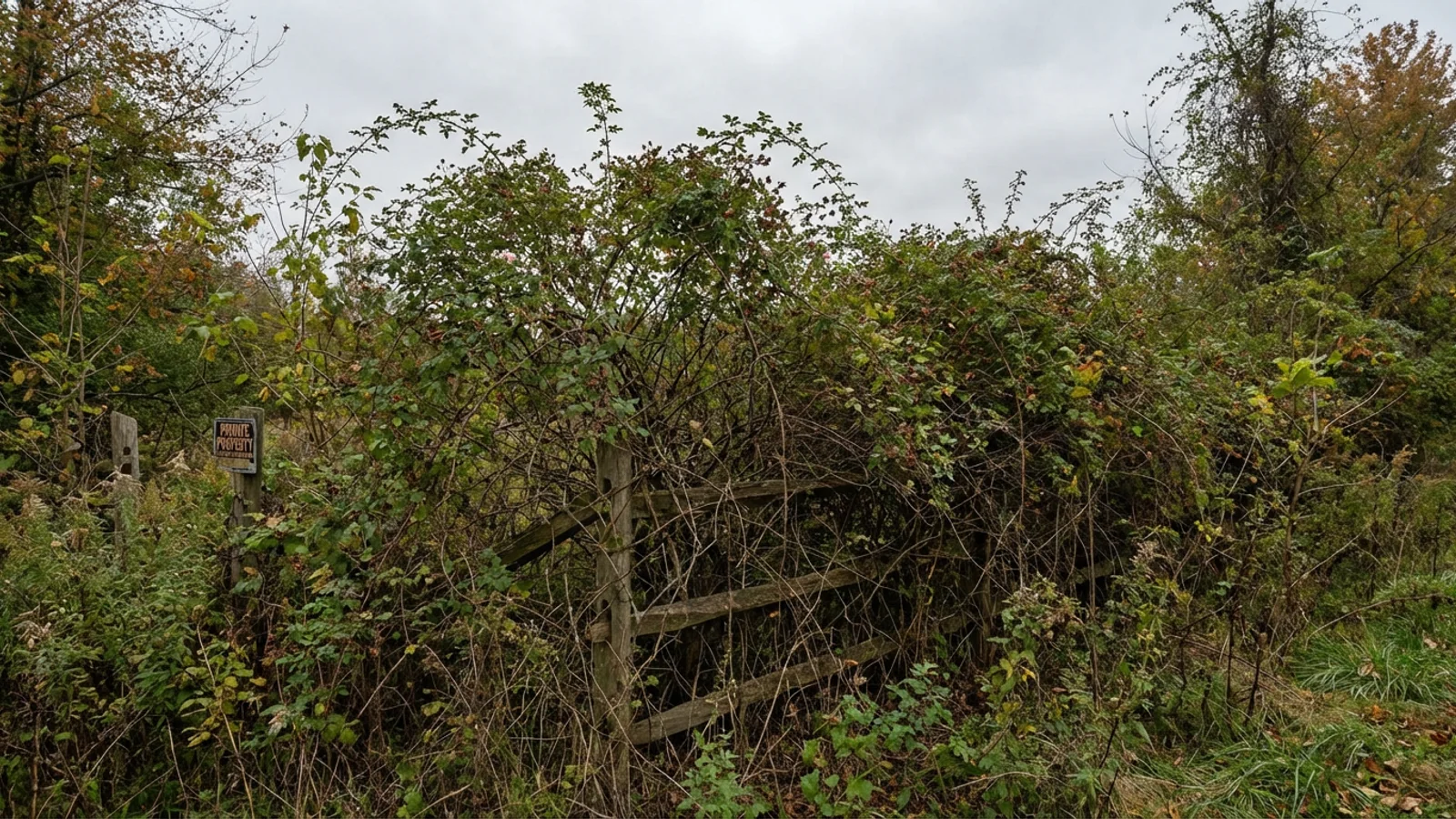
Before
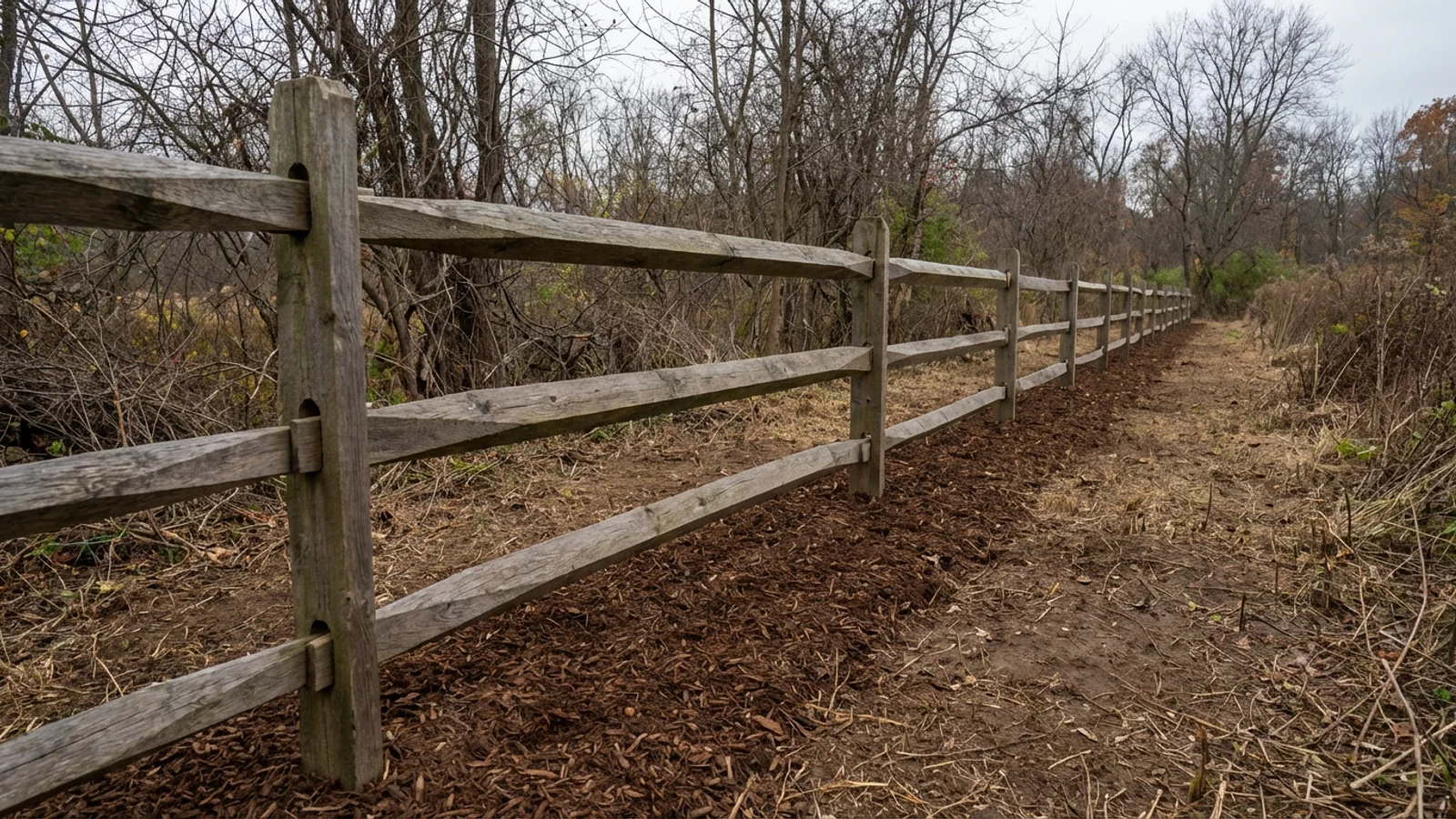
After
Typical fence line clearing result from buried boundary to visible maintained edge
Common Questions
How much does fence line clearing cost?
Fence line clearing typically runs $2,500 to $6,000 for 500–2,000 linear feet with moderate overgrowth. Larger runs are priced by footage. Get a free estimate.
Will you damage my fence during clearing?
No. Our operators work within inches of posts and rails without contact. We clear fence lines every week across our service area.
How wide a swath do you clear on each side of the fence?
Typically 10–20 feet per side, depending on encroachment and your preference. Horse property owners usually want at least 15 feet per side.
How long does fence line clearing take?
500–1,000 linear feet takes a half day to a full day. Multiple paddock fences may take 1–2 days. We include timelines with every quote.
Will multiflora rose grow back after you clear the fence line?
Mulching kills the majority by grinding the root crown. Resprouts from established plants can be eliminated with one round of spot herbicide. Annual mowing after that keeps it clean. Learn about our invasive species approach.
Can you clear fence lines on steep terrain?
Yes. Our tracked equipment handles slopes common in Morris and Hunterdon counties. Learn about our hillside clearing capabilities.
Do you remove the old fence during clearing?
No — we clear brush from around the fence. After clearing, your fence contractor can access every foot for inspection or repair.
Can you clear a fence line route before new fencing is installed?
Yes. We clear the route to bare ground and grind stumps flush so the installer has a clean path. Common for new perimeter fencing and paddock divisions.
Is fence line clearing different from forestry mulching?
It uses the same equipment but the operation is more precise — the operator works parallel to the fence at close range. Learn about our standard forestry mulching service.
What's the best time of year to clear fence lines?
Fall and winter are ideal — firm ground, dormant vegetation, and the fence is visible through leafless brush. Read our seasonal clearing guide.
Related Services
Forestry Mulching
Brush Clearing
Pasture & Property Reclamation
Invasive Species Removal
Need the full New Jersey clearing picture?
Our complete guide walks through methods, costs, permits, regulations, invasive species, and how to choose the right approach before you commit to a job.
Can't see your fence line? We can fix that.
Get a free estimate — tell us how much fence you have and we'll give you a price and a timeline.
Or call (908) 774-9235.