

Home / Field Notes — Land Clearing Knowledge Base / Clearing Overgrown Property Before Selling in New Jersey
Clearing Overgrown Property Before Selling in New Jersey
Published April 4, 2026 by Brush Busters • Last reviewed April 4, 2026
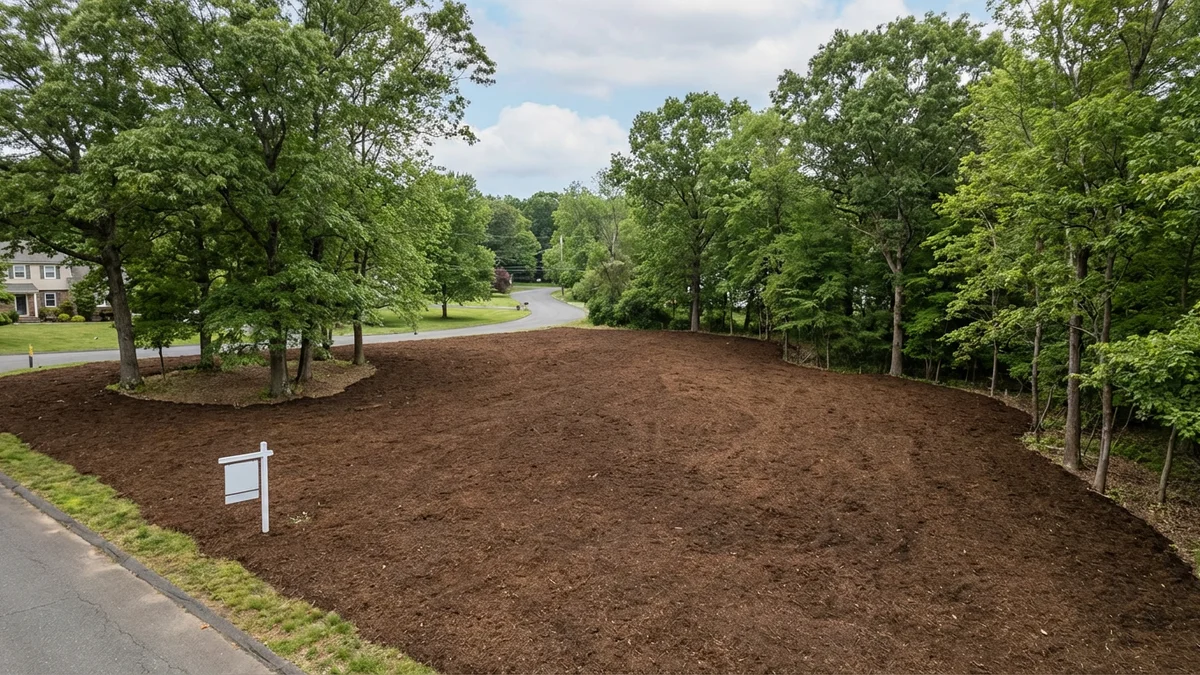
Overgrown land sells for less. This isn’t an opinion — it’s consistent across every transaction we’ve seen in Hunterdon, Somerset, Warren, and Morris counties. A five-acre parcel choked with autumn olive and multiflora rose where the buyer can’t walk 20 feet from the road looks like a problem. The same parcel cleared to clean mulch with open sight lines looks like a property. Buyers can see the terrain, visualize the building site, and imagine what the land could be. That visibility is worth money — typically a lot more money than the clearing costs.
The ROI of pre-sale clearing
Let’s put numbers on it. These ranges reflect what we see in central-western New Jersey:
Clearing cost for a typical 3–5 acre overgrown parcel: $4,000 to $10,000 with forestry mulching, depending on vegetation density and terrain.
Value impact of clearing:
Overgrown land in our service area sells for an estimated 25–40% below comparable cleared parcels. On a $100,000 vacant lot, that’s $25,000 to $40,000 in suppressed value. On a $200,000 parcel, it’s $50,000 to $80,000.
Even at the conservative end — spending $8,000 to clear and recovering $25,000 in sale price — the return is 3:1. At the higher end, the return can exceed 8:1.
The math is straightforward: clearing is the highest-ROI improvement you can make to overgrown vacant land before listing. It costs less than a kitchen remodel and has a more reliable return.
Why the discount exists:
Buyers discount overgrown land because they see risk, not opportunity. They don’t know what’s under the brush — is the terrain buildable? Is there rock? Are there wetlands? What’s the access situation? How much will clearing cost THEM? Buyers always overestimate the cost and difficulty of clearing land they can’t see. When you clear before listing, you eliminate that uncertainty — and the discount that comes with it.
What to clear and what to leave
Pre-sale clearing isn’t about stripping the property bare. It’s about showing the land’s best features while preserving the elements that give it value.
Clear: Brush, invasive species, sapling regrowth, vine tangles, and anything that prevents a buyer from walking the property and seeing the terrain. Open the sight lines from the road. Clear along any existing trails, driveways, or fence lines to show the property’s structure. Clear potential building sites so buyers can stand where the house would go and see the view.
Preserve: Mature hardwood trees (these add value, not cost). Stone walls and historic features. The tree line along property boundaries (screening and privacy). Anything that contributes to the property’s character — a specimen oak, a stone-lined pond site, an old orchard.
Be strategic about views. On properties with ridgetop or valley views in Clinton, Delaware Township, or the Watchung ridge areas, clearing to expose the view can be the single highest-value improvement. A lot that “has views” on the listing is worth substantially more than a lot that “may have views behind the brush.”
Timing and listing coordination
Clear before listing photos. This seems obvious, but the listing photos are the buyer’s first impression. A mulched property with open sight lines photographs dramatically better than an overgrown tangle. The drone shot that shows the cleared building site, the tree-lined boundaries, and the terrain contour is the image that generates inquiries.
Clear in fall or early winter for spring listing. The best listing season for vacant land in NJ is late spring through early fall. Clear in October through February — the ground is firm, the clearing is efficient, and by listing time the mulch has settled and begun to weather into a natural-looking surface.
Clear before the appraisal. If the buyer is financing with a land loan, the lender orders an appraisal. A cleared property appraises higher than an overgrown one because the appraiser can see and assess the land. The same sight-line principle that works on buyers works on appraisers.
Who calls us for pre-sale clearing
Estate and inherited property owners. The most common scenario. Someone inherits a rural property from a parent or relative. The property hasn’t been maintained in years — sometimes decades. The heir lives out of the area, doesn’t want to keep the land, and needs to sell. Clearing transforms the property from “abandoned-looking problem” to “ready-to-develop opportunity.”
Real estate investors buying undervalued overgrown parcels, clearing them, and reselling at market value. The clearing cost is the investment; the price delta is the return. We see this frequently in Hunterdon County where agricultural parcels that have reverted to brush are purchased, cleared, and resold to builders or horse property buyers.
Homeowners selling a property where only the house lot is maintained. The house sits on two acres of mowed lawn, but there’s another three to eight acres of overgrown wooded land behind it. Clearing the back acreage — or at least opening trails and sight lines through it — adds value to the total property and shows buyers what they’re getting beyond the house.
Agents who advise sellers on pre-listing improvements. Some of the most effective agents in our area recommend clearing as the first improvement before painting, landscaping, or staging.
What NOT to do before selling
Don’t bulldoze. Bulldozing strips topsoil, creates debris piles, and leaves the property looking industrial and damaged. Buyers want to see natural-looking cleared land — not a construction site.
Don’t half-clear. A property with some brush mowed and some still standing looks worse than a property that’s either fully overgrown or fully cleared. If you’re going to clear, clear the full visible area from the road and from any building site.
Don’t clear everything. Removing all trees on a wooded lot destroys its value. Mature trees provide shade, screening, wind protection, and visual appeal. Selective clearing that opens the understory while preserving the canopy is far more valuable than scorched earth.
Don’t wait until you list. Clearing takes one to five days depending on acreage. Scheduling takes one to two weeks. If you’re listing in April, start the clearing conversation in February — not March.
Common Questions
How much does pre-sale land clearing cost in NJ?
Clearing 3–5 acres runs $4,000–$10,000. Smaller residential lots run $2,000–$5,000. Get a free estimate for your property.
How much value does clearing add to a property?
Overgrown land sells for 25–40% below cleared comparables. Clearing costs are typically 5–15% of the value recovered — a 3:1 to 8:1 ROI.
Should I clear before listing or let the buyer handle it?
Clear before listing. Buyers overestimate clearing costs and discount their offers by more than the actual clearing expense. Clearing first eliminates uncertainty and improves listing photos.
When should I clear relative to my listing date?
At least 4–6 weeks before listing. For spring listings, clear in late fall or winter. This gives the mulch time to settle and allows for professional listing photography.
Should I clear the entire property or just part of it?
Clear the road-visible area, building sites, and feature areas (views, water). Preserve the tree canopy and selectively clear the understory — this is more valuable than clearing everything.
Does clearing help with land appraisals?
Yes — appraisers assess cleared land more accurately. Cleared properties compare favorably to cleared comps, which typically appraise higher.
I inherited overgrown property in NJ. Where do I start?
Start with a site visit. We walk inherited properties regularly and assess condition, terrain, and clearing scope. Schedule a free site visit.
Can you clear around an existing house on a property I'm selling?
Yes — we clear overgrown acreage around existing homes all the time, working selectively around the house, landscaping, and features you want to keep.
Does clearing affect farmland assessment?
Clearing to restore agricultural use supports the assessment. If selling and losing the assessment, consult your tax advisor on rollback implications before listing.
Do real estate agents recommend pre-sale clearing?
The best agents recommend it — pre-sale clearing is one of the highest-ROI improvements for vacant land. Learn about our work with real estate professionals.
Related Services
Land Clearing / Lot Prep
Residential and small commercial lots cleared and prepped for building, grading, or landscaping.
Relevant City Pages
These city pages are a good fit if you want to compare the article advice with the kind of properties we see on the ground.
Helpful Resources
Real Estate Investors
Homeowners
Related Articles
Land Clearing Cost Per Acre in New Jersey: Pricing Guide
New Jersey land clearing cost per acre explained: method, terrain, tree size, access, and how to compare quotes without getting burned.
See Land Clearing Cost Per Acre in New Jersey: Pricing Guide
How to Clear an Overgrown Backyard in New Jersey
How to clear an overgrown backyard in New Jersey: when DIY works, when it doesn’t, what it costs, and how long it takes.
Want the full New Jersey land clearing playbook?
This article covers one piece of the puzzle. The complete guide ties together methods, costs, permits, terrain, and contractor selection in one place.
Listing overgrown land? Clear it first.
The highest-ROI improvement you can make before selling. Free site visit, written quote, fixed price.
Or call (908) 774-9235.