

Home / Field Notes — Land Clearing Knowledge Base / Fall Land Clearing in New Jersey: Why Autumn Is the Best Window
Fall Land Clearing in New Jersey: Why Autumn Is the Best Window
Published April 5, 2026 by Brush Busters • Last reviewed April 5, 2026
If you’re going to clear land in New Jersey and you have the flexibility to choose your timing, choose fall. October through November is the ideal window — and late September and early December extend the season on either end when conditions cooperate. No other season combines all the advantages at once: the ground is firm from summer drought, the leaves are dropping for visibility, invasives are going dormant, the air is cool for long work days, and you have the entire winter buffer before your spring project begins.
This isn’t a marginal preference. Fall clearing is measurably faster, cleaner, and less risky than any other season. Here’s why each factor matters.
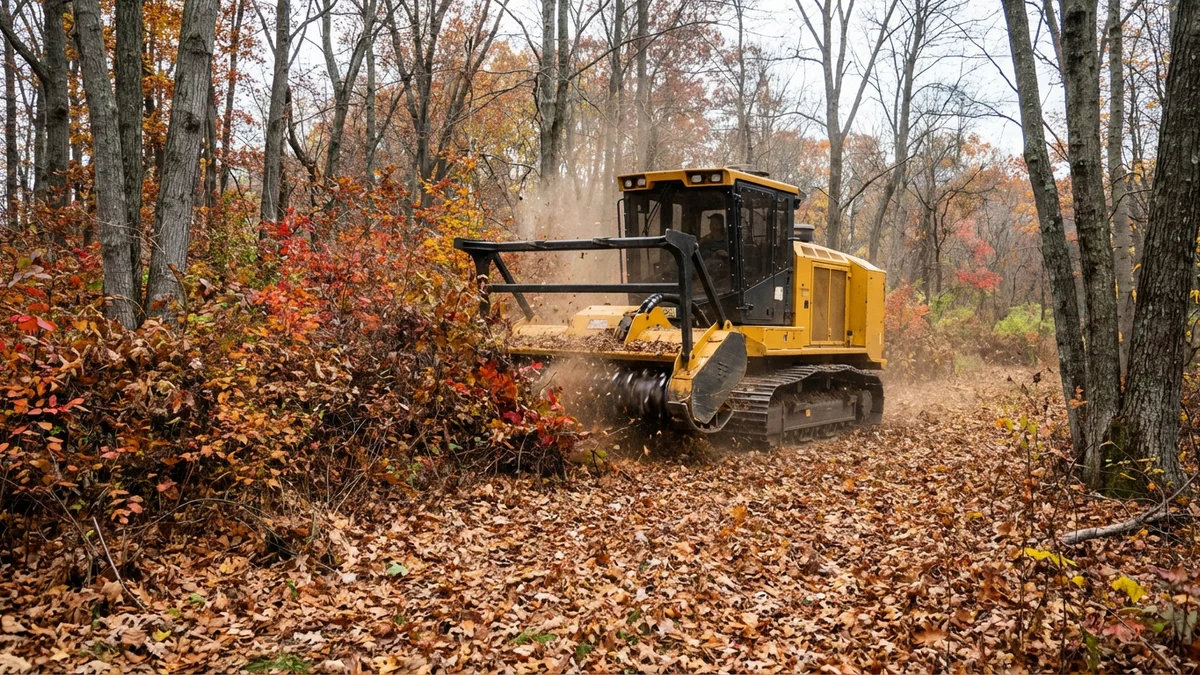
The fall advantage stack
Firm ground. After summer’s dry months, NJ soils are at their most compact and load-bearing. The clay-heavy valley floors that turn to mud in March are firm and dry in October. Even properties that are borderline soft in spring — the low fields in Pohatcong, the alluvial terraces in Delaware Township — are typically solid in fall. Equipment runs at full speed without rutting concerns.
Leaf-off visibility. By mid-October, most NJ deciduous trees are dropping leaves. By November, the canopy is open. The operator sees the terrain, the obstacles, and the clearing boundary with maximum clarity. On wooded properties in Bernardsville, Mendham, and Roxbury, the visibility difference between summer (zero sight lines through the understory) and fall (200-foot sight lines through bare trees) transforms the efficiency of the job.
Dormant invasives. Multiflora rose, barberry, autumn olive, and bittersweet are entering dormancy. Growth has stopped. The stems are drying. The root systems have translocated their energy reserves for winter storage. Clearing dormant plants means the roots have fewer resources to resprout in spring compared to clearing during the active growing season when the root system is fully charged.
Cool temperatures. The equipment runs more efficiently in cool weather (no overheating). The operator works full days without heat fatigue. The cooler air holds less moisture, which means drier mulch and a cleaner cut.
Scheduling lead time. A property cleared in October gives you five to six months before spring construction, planting, or listing. That’s enough time for the mulch to settle and begin weathering, for any permits to be processed, and for the builder or contractor to assess the cleared site at their convenience. There’s no rush between clearing and use.
No regrowth gap. A site cleared in October goes dormant immediately. Nothing regrows until April. That’s six months of zero maintenance — the cleared property looks the same in March as it did in October (slightly more weathered mulch, same cleared area). Compare this to clearing in June, where you need a September follow-up mow to handle three months of summer regrowth.
Fall clearing for specific project types
Spring construction. Clear in October-November. The builder does a site visit in December or January (winter weather permitting) to finalize plans based on the visible, cleared terrain. Permit applications proceed through winter. Foundation work begins in April when the frost is out. You’ve added zero time to the construction timeline and gained months of planning clarity.
Spring planting and farm reclamation. Clear in October-November. The mulch settles through winter. Soil test in March. Amend and seed in April-May. The mulch has partially decomposed by planting time, creating a better seedbed than fresh mulch. This is the standard sequence for fallow-field reclamation in Hunterdon and Warren counties.
Property listing. Clear in October-November. The mulch weathers through winter into a natural-looking, muted brown surface. By spring listing season (April-May), the cleared property photographs beautifully — the mulch blends into the landscape, the surrounding trees are greening up, and the cleared areas contrast with the new growth to show the property’s full potential.
Tick habitat reduction. Clear the barberry and understory in October-November. The cleared area is tick-free heading into winter. When spring tick season begins in March-April, the modified habitat is already in place. No ticks are questing on vegetation that no longer exists. This gives you a full season of reduced exposure starting from the first warm day.
General property improvement. Clear in fall, enjoy the result year-round. The property is open and walkable through winter (great for hunting season). Spring arrives with the clearing already done — you’re not competing with every other property owner who waited until April to think about clearing.
What fall clearing handles best
Multiflora rose at peak visibility. The thorny thickets that are hidden within the summer canopy stand out in fall once the surrounding vegetation thins. Rose retains its leaves longer than many deciduous species, making it even more visible against the bare background.
Bittersweet with fruit. Oriental bittersweet produces its distinctive orange-and-red fruit capsules in October — the easiest identification period. Climbing vines are clearly visible against bare tree trunks. Fall is the best season to identify and cut every bittersweet vine on a property.
Autumn olive with berries. The red, silvery-speckled berries of autumn olive ripen in September-October. The berries make identification positive and the timing is ideal for clearing before birds spread the seeds further.
Poison ivy in color. Poison ivy turns vivid red-orange in fall — the most visible it will be all year. The bright fall color makes it easy to flag before the clearing crew arrives. Once the leaves drop, the “hairy rope” climbing vines remain identifiable through winter.
Fall timing details
September. Late September works for clearing, but the foliage is still largely on. It’s more like late-summer clearing with better temperatures. Ideal for open-field work where canopy visibility doesn’t matter (pasture reclamation, fence line clearing).
October. The sweet spot begins. Leaves are falling, ground is dry and firm, temperatures are in the 50s–60s. The last two weeks of October are typically the single best clearing window in the NJ calendar year.
November. Peak fall clearing season continues. Most trees are bare by mid-November. The ground remains firm until significant November rain saturates it. Temperatures may dip but the work continues until sustained freezing.
Early December. If the ground hasn’t frozen yet (common in warmer fall years), December extends the fall window. Once the ground freezes, it transitions to winter clearing conditions — which are equally good, just different.
Common Questions
Why is fall the best time to clear land in NJ?
Firm ground, leaf-off visibility, dormant invasives, cool temps, and months of lead time. No other season combines all advantages. Optimal window: mid-October through November.
How far in advance should I schedule fall clearing?
Reach out in August-September for October-November work. Fall is our busiest season — book early. Schedule your fall clearing now.
What if it rains in fall?
Fall soil starts dry, so rain soaks in and the ground recovers quickly — much faster than spring. A day of rain barely affects the schedule.
Should I clear in fall or winter?
Both are excellent. Fall has color-based species ID. Winter has frozen ground. Well-drained soil → fall. Soft clay → winter. Read our winter clearing guide.
Will fall clearing be ready for spring construction?
Yes — October-November clearing gives the builder 5–6 months of lead time. The most common clearing-to-construction sequence in our area.
Does fall clearing cost more because it's the busy season?
No — same per-acre pricing year-round. Fall availability fills faster, so book in August-September. Reserve your fall dates now.
Can I seed immediately after fall clearing?
If clearing in September-early October, yes — broadcast seed over the mulch. If clearing late October+, wait until April. The mulch protects the soil through winter.
Is fall good for invasive species removal?
The best season. Species are visible (berries, fall color), root reserves are depleted, and herbicide is most effective. Clear in October, treat resprouts, and the roots are weakened by spring.
What is the best time of year to clear a brush?
Late fall through early spring (November-March) is best. Frozen ground, no leaves, dormant ticks/snakes, and cleared land is ready for spring. Winter clearing is ideal. That said, forestry mulching works year-round in NJ – summer and spring are fine too.
Is October too late to spray for weeds?
October is actually a good time. Plants are pulling nutrients into their roots before dormancy, so they pull herbicide down too – more effective than summer application. For invasives like autumn olive and barberry, fall herbicide after mulching targets resprouts at their most vulnerable. Use a licensed applicator.
Related Services
Forestry Mulching
We grind brush, saplings, and small trees into mulch on the spot – no hauling, no burn piles, no mess.
Want the full New Jersey land clearing playbook?
This article covers one piece of the puzzle. The complete guide ties together methods, costs, permits, terrain, and contractor selection in one place.
Fall is the clearing season. Book it now.
October-November is the best window in the NJ calendar. Slots fill fast — schedule your site visit today.
Or call (908) 774-9235.