
Home / Services / Invasive Species Removal
Invasive Species Removal in New Jersey
Invasive species removal in New Jersey is not just about making a property look cleaner. It is about stopping aggressive plants from taking over usable ground, crowding out native growth, damaging fence lines, and turning maintainable property into a constant fight. Around here, that usually means some combination of Japanese knotweed, multiflora rose, mile-a-minute vine, porcelainberry, oriental bittersweet, tree of heaven, and Japanese barberry. Once those species establish, they spread hard and fast.
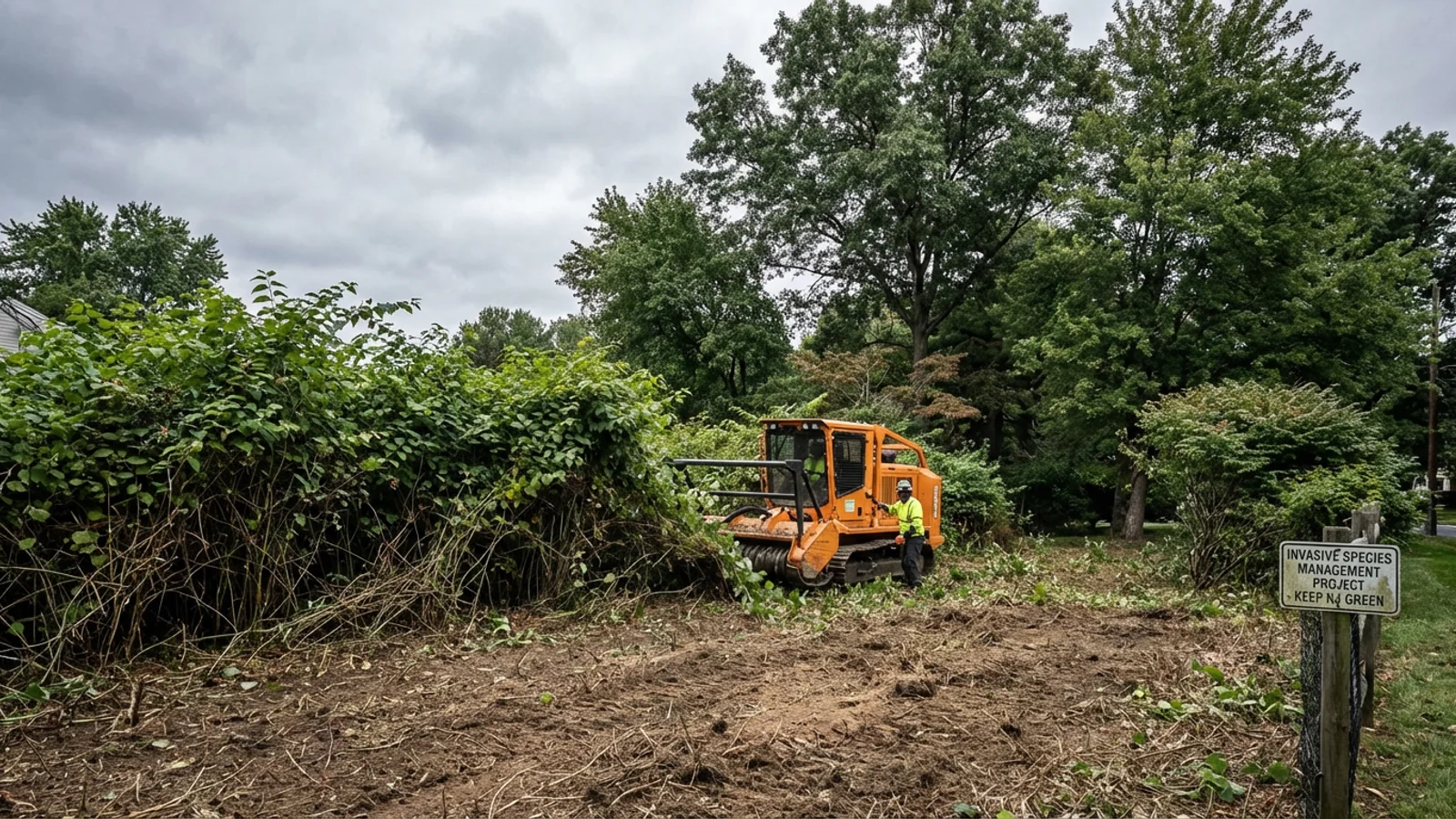
Brush Busters removes invasive growth by using mechanical clearing and forestry mulching to knock back the above-ground mass quickly and open the site back up. That gives owners a real reset. It also makes follow-up management possible where a species is likely to return from roots, rhizomes, or seed bank. The first step is reclaiming the space so you can see the ground again. After that, the site becomes much easier to maintain, monitor, and keep from getting swallowed again.
How Invasive Species Removal Works
Every invasive species behaves differently, which is why the first step is identifying what is actually growing on the property. Multiflora rose forms thorny walls that block access. Autumn olive does the same thing across fallow ground, while bamboo becomes the suburban version of that problem. Knotweed can dominate wet edges and disturbed ground. Mile-a-minute vine climbs and blankets everything it touches. Tree of heaven sends up suckers and can spread aggressively along disturbed areas. We look at what is on the site, how mature the infestation is, and how the species is interacting with the rest of the property.
Mechanical clearing and mulching are often the best first move because they remove the dense top growth quickly and restore access. That matters when the infestation has reached the point where walking, inspection, mowing, or targeted treatment is not realistic. It is also where species-by-species guidance starts to matter, especially with Callery pear volunteers or wetter-ground problems like phragmites. Once the site is opened up, owners can actually see where the invasive pressure is strongest and what areas may need watchful follow-up. On many properties, that initial reset is the only way to make long-term control manageable. It is also one of the clearest paths to better tick prevention on overgrown lots.
It is important to be straight about limitations. Some invasive plants can regrow from roots, crowns, rhizomes, or seed even after the visible growth is cleared. That does not mean the clearing is not worth doing. It means the clearing is one part of the control plan. We are honest about that upfront, especially on knotweed, tree of heaven, and vine-heavy properties where follow-up attention is usually the smart move.
What's Included
- Mechanical knockback and mulching of dense invasive growth that has taken over fields, fence lines, lot edges, trails, and wooded understory.
- Clearing of species commonly found on New Jersey properties, including Japanese knotweed, multiflora rose, mile-a-minute vine, porcelainberry, bittersweet, tree of heaven, and Japanese barberry.
- Opening up infested areas so owners can regain access and actually inspect how far the problem has spread.
- Selective work around desirable trees, access routes, boundaries, and structures where the invasive growth is the real target.
- Straight discussion about which infestations are likely to need follow-up control after the initial clearing pass.
- A finished site that is far easier to maintain, mow, monitor, and keep from disappearing again.
Best For
- Properties where invasive brush or vine growth has reached the point that ordinary mowing or hand cutting is no longer realistic.
- Fence lines, lot edges, drainage runs, and wooded openings dominated by knotweed, bittersweet, rose, or other aggressive spreaders.
- Owners who need fast access restored before they can even begin a broader long-term management plan.
- Parcels where invasive growth is choking out usable ground, blocking views, damaging fencing, or taking over trails and access lanes.
- Sites where selective mechanical work can remove the dense top growth without broad unnecessary clearing elsewhere on the property.
Pricing Factors for Invasive Species Removal
Pricing depends on the species mix, maturity of the infestation, density of the top growth, and how accessible the affected area is. A patch of knotweed along an edge is a different job from a multi-acre thicket of multiflora rose, bittersweet, barberry, and volunteer saplings. Invasive jobs also vary depending on whether you need one fast knockback or a more selective opening around trees, fences, and property edges.
The biggest cost factor is often how much the invasive growth has merged with the rest of the site. Once species like rose, bittersweet, and tree of heaven are woven through other brush and young trees, the machine work slows down and the strategy becomes more deliberate. We price the work around what it will actually take to reopen the site and put you in a better position to keep the infestation from taking over again.
Why Brush Busters for Invasive Species Removal
Invasive removal is not just generic clearing with a different name. These plants spread differently, regrow differently, and cause different types of damage depending on where they are established. Brush Busters approaches the work with that in mind. We are focused on getting the site usable again fast while being honest about which species may still need follow-up management later.
Owner-operated work helps here because invasive jobs are often selective and goal-driven. You may want knotweed opened up along a drainage edge, rose removed from a fence row, or mile-a-minute cleared off a trail corridor without disturbing the broader woods more than necessary. Those details do not translate well through layers of miscommunication. They are better handled directly from estimate through machine work.
Where We Offer Invasive Species Removal
We work across Hunterdon, Somerset, Warren, and Morris counties, with strong demand in Clinton, NJ, Branchburg, NJ, Hillsborough, NJ, Bernardsville, NJ, Flemington, NJ. Invasive Species Removal is a good fit for everything from tight residential lots to rough back acreage, depending on the scope and the access.
Before and After
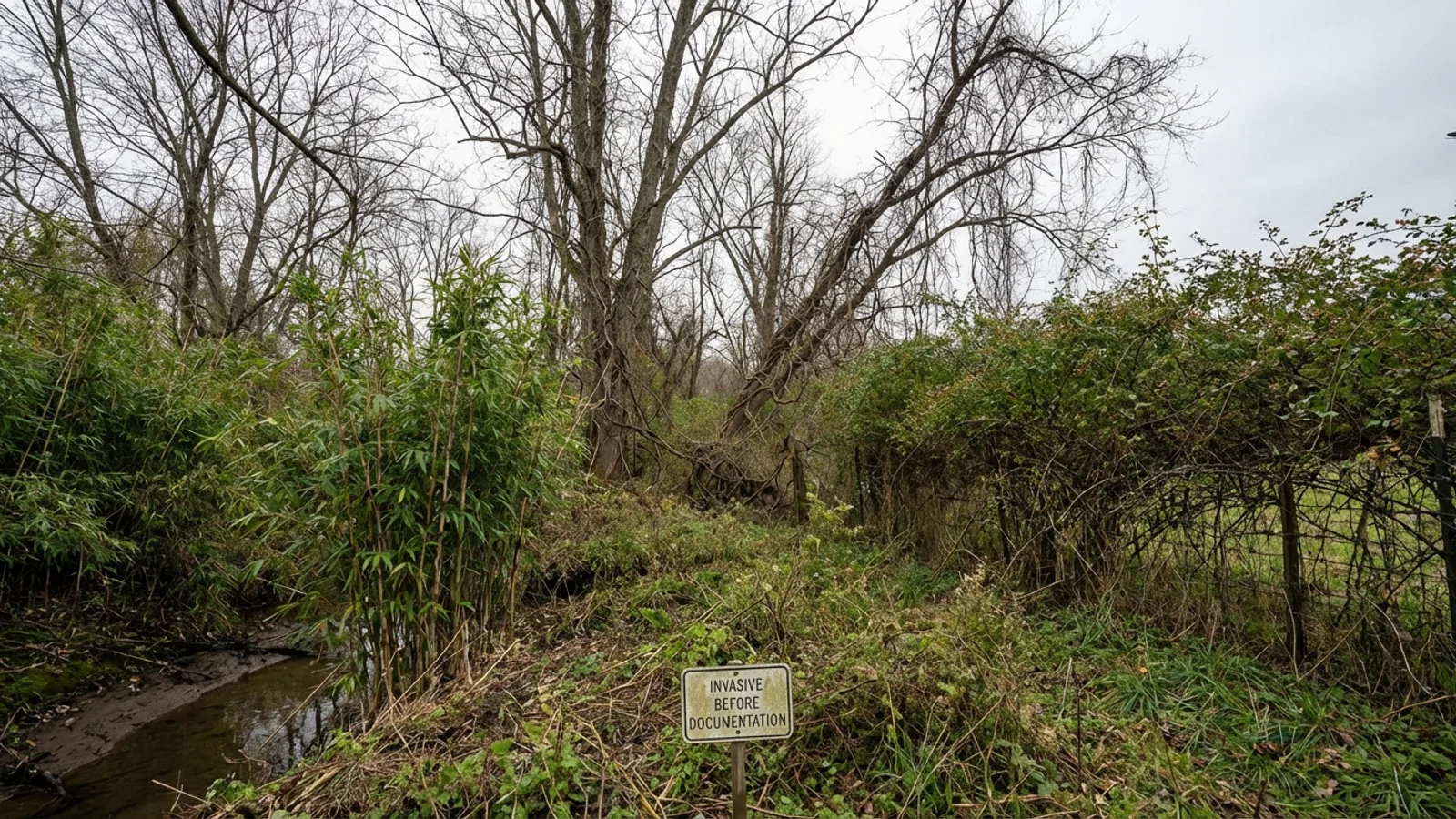
Before
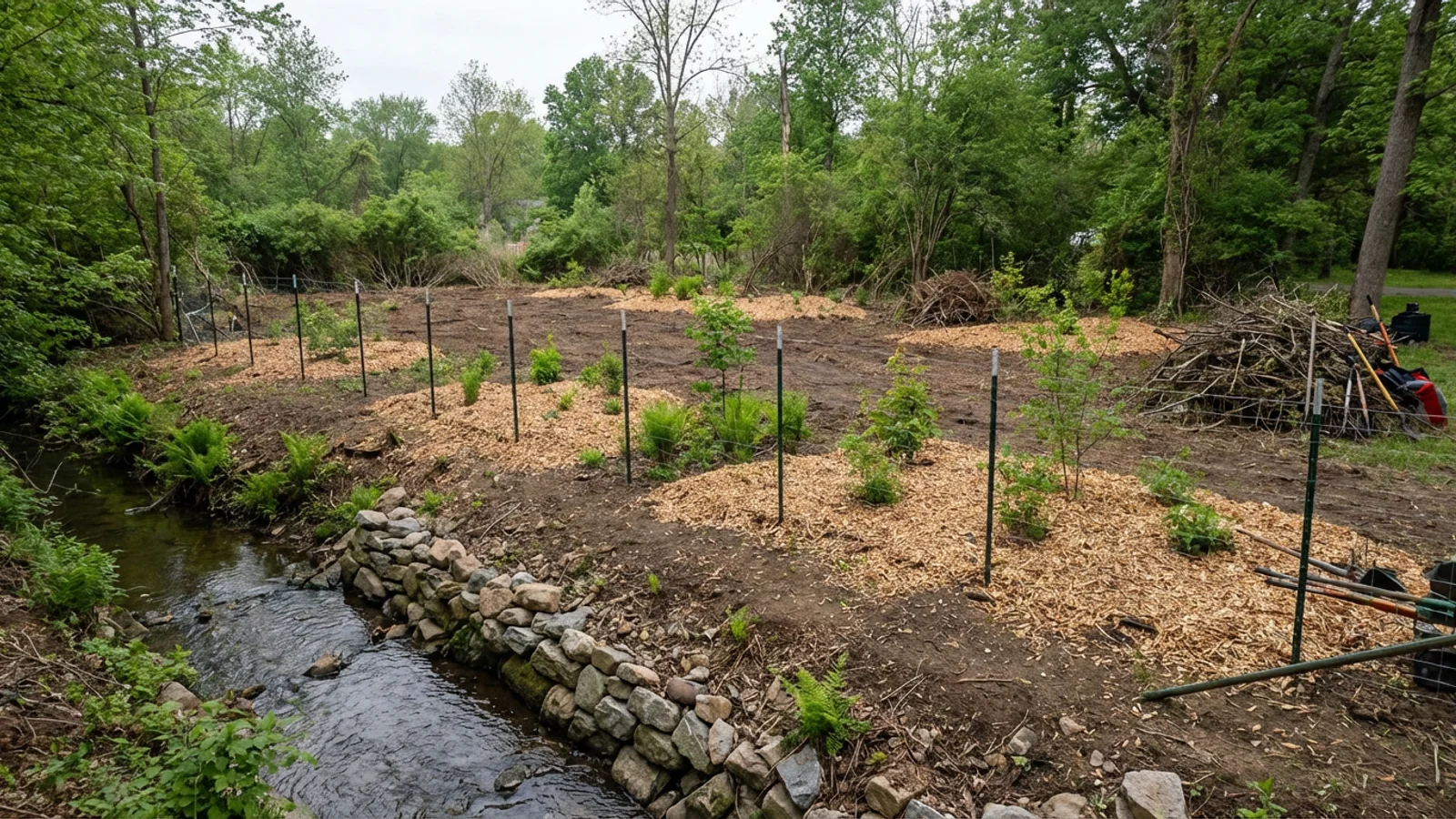
After
Typical invasive species removal result from thicketed infestation to manageable ground
Common Questions
What invasive species do you remove in New Jersey?
Common species we deal with include Japanese knotweed, multiflora rose, mile-a-minute vine, porcelainberry, oriental bittersweet, tree of heaven, and Japanese barberry. Many properties have several of them mixed together in the same overgrown area.
Can forestry mulching remove Japanese knotweed?
Forestry mulching can knock back the dense above-ground growth quickly and reopen the area, which is often the most useful first step. Knotweed can still return from rhizomes, so owners should expect monitoring and, in many cases, follow-up treatment after the initial clearing.
Will invasive species come back after clearing?
Some can. That depends on the species and how established it is. Mechanical clearing is often the fastest way to reset the site, but plants like knotweed, tree of heaven, and some vines may still require follow-up management afterward.
How much does invasive species removal cost?
Cost depends on the type of infestation, density of the growth, size of the area, terrain, and how mixed the invasives are with other vegetation. We quote invasive work after reviewing the species and conditions on-site.
Can you remove multiflora rose and thorny brush?
Yes. Multiflora rose is one of the most common invasive problems we see, especially along field edges and fence lines. Mechanical clearing is often the fastest way to break those thickets open and make the site usable again.
What about tree of heaven?
Tree of heaven can be mechanically knocked back, but it is another species that often needs monitoring because of how aggressively it can sucker and return. We can explain what the initial clearing will accomplish and what the owner should expect after that.
Can you clear invasive vines off fence lines and trails?
Yes. Invasive vines are common along fence rows, property edges, and internal access routes. We can remove the heavy top growth and reopen those areas so the line or trail can be maintained again.
Do you offer follow-up treatment for invasives?
Our core role is the mechanical clearing and mulching side of the work. Depending on the species and site, we can explain whether a follow-up treatment plan makes sense after the first pass so you know what to expect.
Can invasive species removal damage desirable trees?
We work selectively and can clear around trees you want to keep. That said, invasive vines and root competition may already be affecting the health of those trees before we arrive. Clearing the invasive pressure is often part of protecting what is still worth saving.
Where can I learn more about invasive plants in New Jersey?
We will continue building species-specific notes in Field Notes so owners can understand what they are dealing with before and after clearing. For now, that hub is the best place to watch for those updates.
Related Services
Brush Clearing
Thick undergrowth, vines, and overgrown fence lines cleared down to clean, walkable ground.
Forestry Mulching
We grind brush, saplings, and small trees into mulch on the spot – no hauling, no burn piles, no mess.
Fence Line Clearing
Buried fence rows and overgrown property borders opened up and made visible again.
Need the full New Jersey clearing picture?
Our complete guide walks through methods, costs, permits, regulations, invasive species, and how to choose the right approach before you commit to a job.
Need a Straight Answer on the Scope?
Tell us where the property is, what needs to go, and what you want to keep. We will walk the site and give you a clear next step.
Or call (908) 774-9235.